
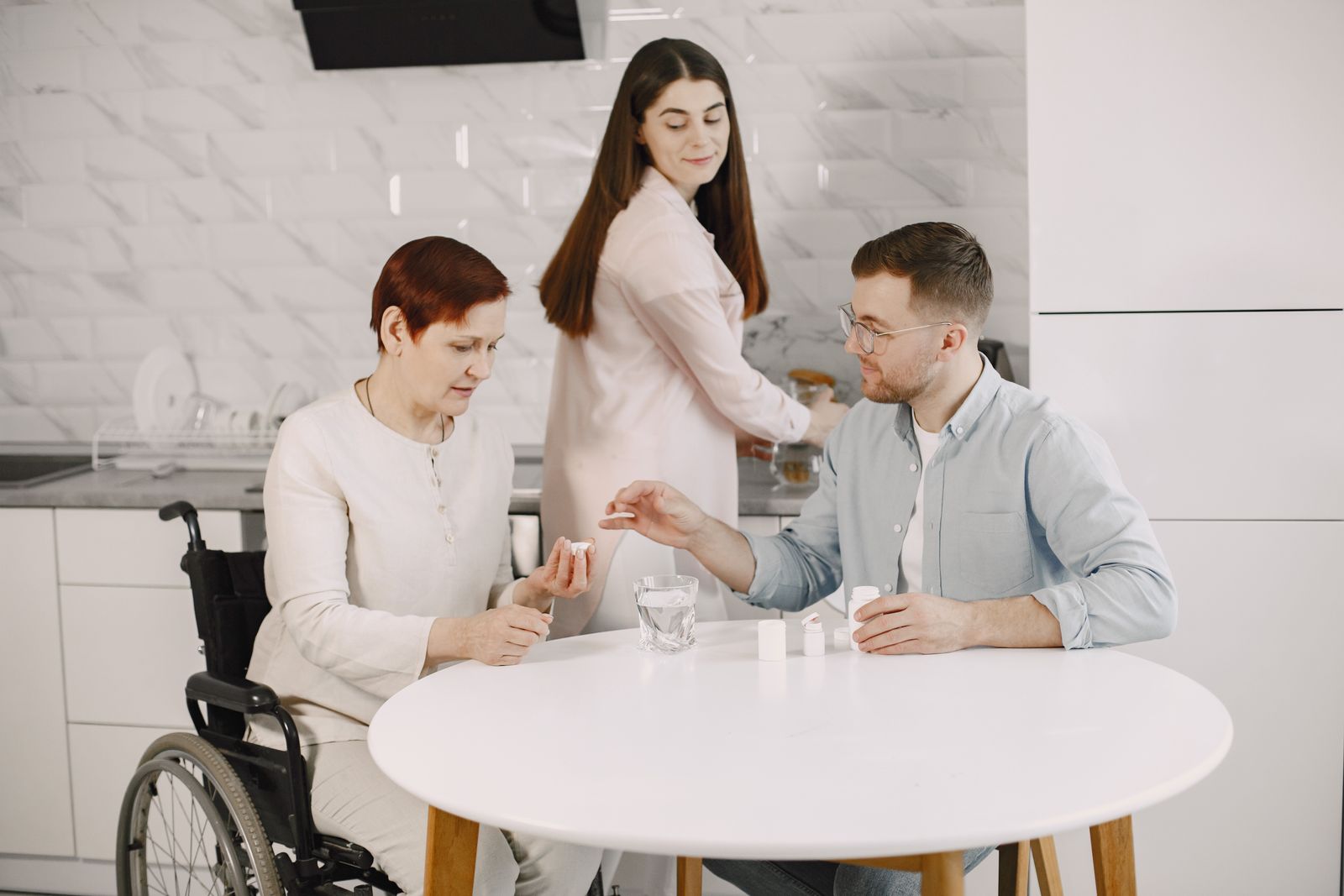
Photo: illustrative — adult children helping their mother with her medication at the kitchen table. Stock photo by Gustavo Fring via Pexels.
The most common medication mistakes in elderly parents are quiet ones: a double dose nobody logged, expired pills still in the cabinet, over-the-counter medicines that clash with prescriptions, and no single medication list everyone trusts. A twenty-minute medicine cabinet check and one shared list will catch almost all of them.
Imagine opening your mom's medicine cabinet on a Sunday afternoon and finding a small pharmacy in there. Two bottles of the same blood pressure pill — one from her old doctor, one from the new one. Painkillers from a surgery three years ago, and sleep aids she bought herself next to a prescription that already makes her drowsy. A pill organizer with Tuesday's compartment still full on a Thursday, and nobody can say whether she took them or skipped them.
If that scene feels familiar, you're looking at one of the most common medication mistakes in elderly parents — and one of the most fixable. Most medication errors at home aren't dramatic. They're quiet and ordinary, and they build up over weeks: a missed dose here, a doubled dose there. Almost all of them can be caught with one careful look and one shared system.
What Are the Most Common Medication Mistakes in Elderly Parents?
1. The double dose nobody logged. Your dad takes his morning pill. An hour later he can't remember if he did, so he takes it again. Or you give it to him, and your sister, not knowing, gives it to him again that evening. When more than one person is involved and nobody writes it down, double doses are almost inevitable. The fix is simple: every dose gets logged the moment it's given — by whoever gave it, where everyone can see it.
2. Expired and leftover medicines still in the cabinet. Old antibiotics from a finished course, painkillers from a surgery years ago, a bottle past its date that looks exactly like the current one. Expired medicines can lose strength or become unsafe — and leftover pills invite self-treating a new symptom with an old answer. Once or twice a year, pull everything out, check every date, and take the leftovers to a pharmacy take-back.
3. Over-the-counter pills and supplements that clash. The vitamins, the sleep aid from the drugstore, the ibuprofen for the sore knee — your parent probably doesn't think of these as "medication," so they never make it onto the list they hand the doctor. But they can interact with prescriptions in real ways. Bring every bottle to the next appointment and ask the pharmacist to check the whole collection together.
4. Look-alike bottles and wrong-time doses. When the regimen grows to eight or ten bottles, the morning pill and the bedtime pill start to look the same — same size, same color, similar names. Add a tired caregiver or a parent with fading eyesight, and the wrong pill at the wrong time is a matter of when, not if. A weekly pill organizer for elderly parents helps, but only if one person fills it.
5. Quietly skipping doses because of side effects. A pill that makes your mom dizzy, nauseous, or foggy is a pill she will quietly stop taking — and she may not tell you, because she doesn't want to worry you. Skipped doses look like the medicine "not working," which can lead to a higher dose of something she wasn't taking in the first place. If a new pill changes how your parent feels, that's a call to the doctor or pharmacist, not a secret to keep.
6. Splitting or crushing pills that shouldn't be. Some tablets can be split; some can't — the ones designed to release slowly over the day can dump a whole day's dose at once if they're crushed or cut. Never split or crush a pill to make it easier to swallow without checking with the pharmacist first.
7. No single list everyone trusts. The doctor has one list. The pharmacy has another. Your brother has a photo of a list from six months ago. The home aide is working from memory. When every person in your parent's care is working from a different version, mistakes hide. One shared, up-to-date medication list, kept where the whole family can see it, is the single highest-value habit in this entire post.
How Do I Do a Quick Medicine Cabinet Check for My Parent?
You don't need a medical degree to catch most of this — medication safety for seniors at home mostly comes down to looking carefully, once. You need twenty minutes and a trash bag:
- Pull every bottle, box, and organizer out of the cabinet.
- Check every expiry date. Anything expired or from a finished treatment goes in the bag for a pharmacy take-back.
- Look for duplicates — two bottles of the same drug, or two drugs that do the same thing under different brand names.
- Write down everything that's left, including over-the-counter pills, vitamins, and supplements, with the dose and the time of day.
- Compare that list against the one the doctor has. If they don't match, call the office and sort it out.
- Decide who fills the pill organizer, and when. One person, one day a week, same day every week.
Repeat it every few months, or any time a prescription changes. A cabinet check after a hospital discharge is worth its weight in gold — that's when the list changes fastest and mistakes slip in easiest.
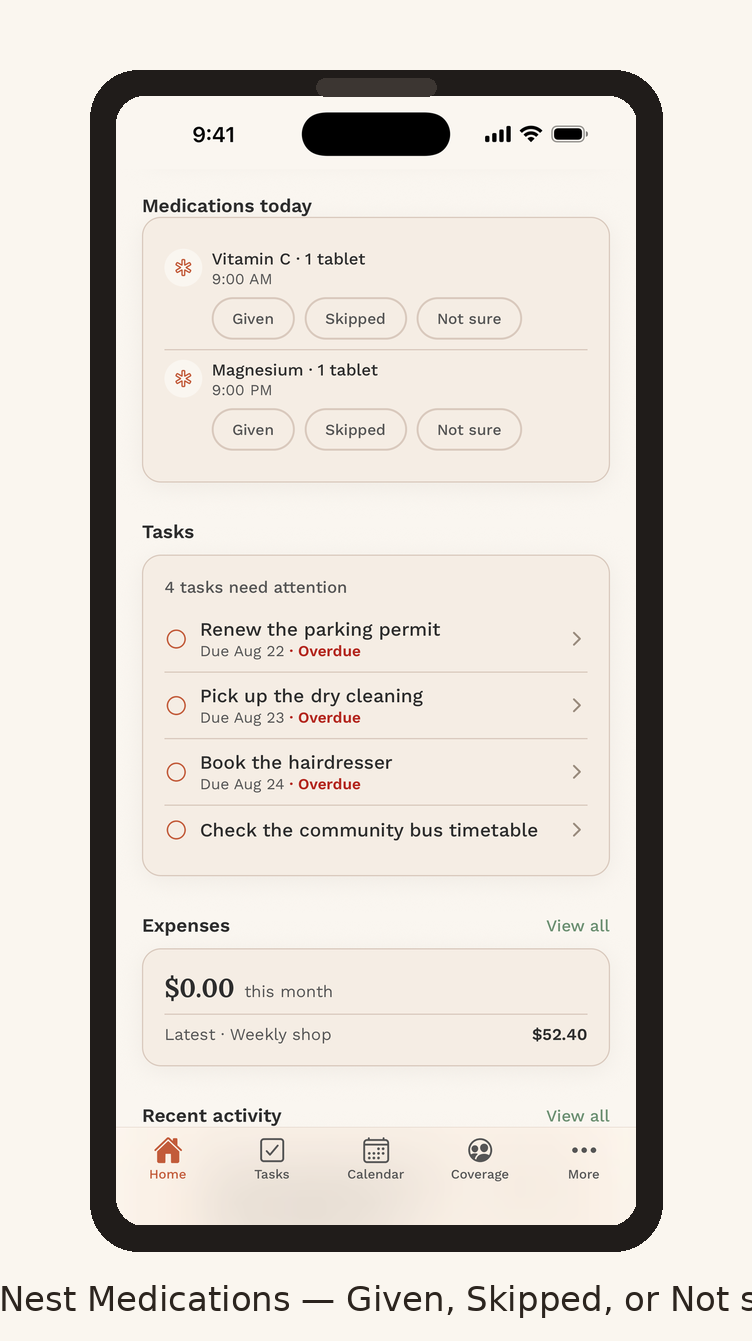
FairNest Medications — today's doses with Given, Skipped, or Not sure, so the whole family sees what already happened.
Why I Built FairNest
I built FairNest because the medication mistakes that scare me most aren't the complicated ones — they're the ones that happen when nobody can see what already happened today. In our Nest, the day's medications sit right on the home screen, and whoever gives a dose taps Given, Skipped, or Not sure — so the whole family sees it instantly, and nobody has to guess or ask twice.
It's my own app, built for families like ours — the ones where three people share the caregiving and none of them wants to be the one who accidentally doubles a dose. You can find it at getfairnest.com.
Most medication mistakes in elderly parents aren't anyone's fault. They're what happens when a complicated regimen meets a busy family with no shared record. A twenty-minute cabinet check, one trusted list, and a habit of logging every dose will catch almost all of them.
Bottom line: Most medication mistakes in elderly parents aren't anyone's fault — they're what happens when a complicated regimen meets a busy family with no shared record. A twenty-minute cabinet check, one trusted medication list for aging parents, and a habit of logging every dose will catch almost all of them.
This isn't medical advice — talk to your parent's doctor or pharmacist about what's right for them. FairNest is my family caregiving app — one shared Nest for tasks, coverage, handoff notes, cost splitting, and med tracking. Find it free on the App Store at https://apple.co/4xRXJuq and on Google Play at https://play.google.com/store/apps/details?id=com.bizvizorllc.fairnest, and follow along at https://www.instagram.com/fairnestapp/.