
To hand off caregiving when you go on vacation, write down the daily rhythm and the practical details, assign every job to a named person on a named day, and agree on what deserves a call, what deserves a text, and when the daily update arrives. A good handoff isn't about finding someone perfect — it's about writing down what you know so someone good enough can step in without having to guess.
Imagine this: you've finally booked the trip. Four days away, a real break, the first one in longer than you'd like to admit. And then, the night before you leave, the worry sets in — not about flights or packing, but about your dad. Who will check in on him? Who knows that he takes his evening pill with food, or that the neighbor has a spare key but only for emergencies? If all of that lives in your head, then you're not really going on vacation. You're just caregiving from farther away, with worse cell service.
Learning how to hand off caregiving when you go on vacation is a skill nobody hands you a manual for. Here's the truth I've learned: a good handoff isn't about finding someone perfect. It's about writing down what you know so someone good enough can step in without having to guess.
How to hand off caregiving when you go on vacation: start before you pack
Two weeks out is ideal; two days out is better than nothing. The goal is a short, written handoff that answers the questions a stand-in will actually ask at 8 p.m. on a Tuesday.
Start with the daily rhythm, not the medical chart. What time does your parent wake up, eat, take medications, and go to bed? What does a normal day look like, and what would look wrong? A stand-in doesn't need your parent's full life story. They need to know that Mom skips lunch when she's upset, or that Dad will insist he's already eaten when he hasn't.
Next, the practical details you'd otherwise explain over the phone: where the medications live, how they're organized, who the pharmacy is, and what to do if a dose is missed. Include the doctor's number, the neighbor's number, and the one family member who can make a decision if something unexpected comes up.
Who should cover what while I'm on vacation?
Telling the whole family "someone check on Dad" and assuming it will happen is the fastest way to ruin a handoff.
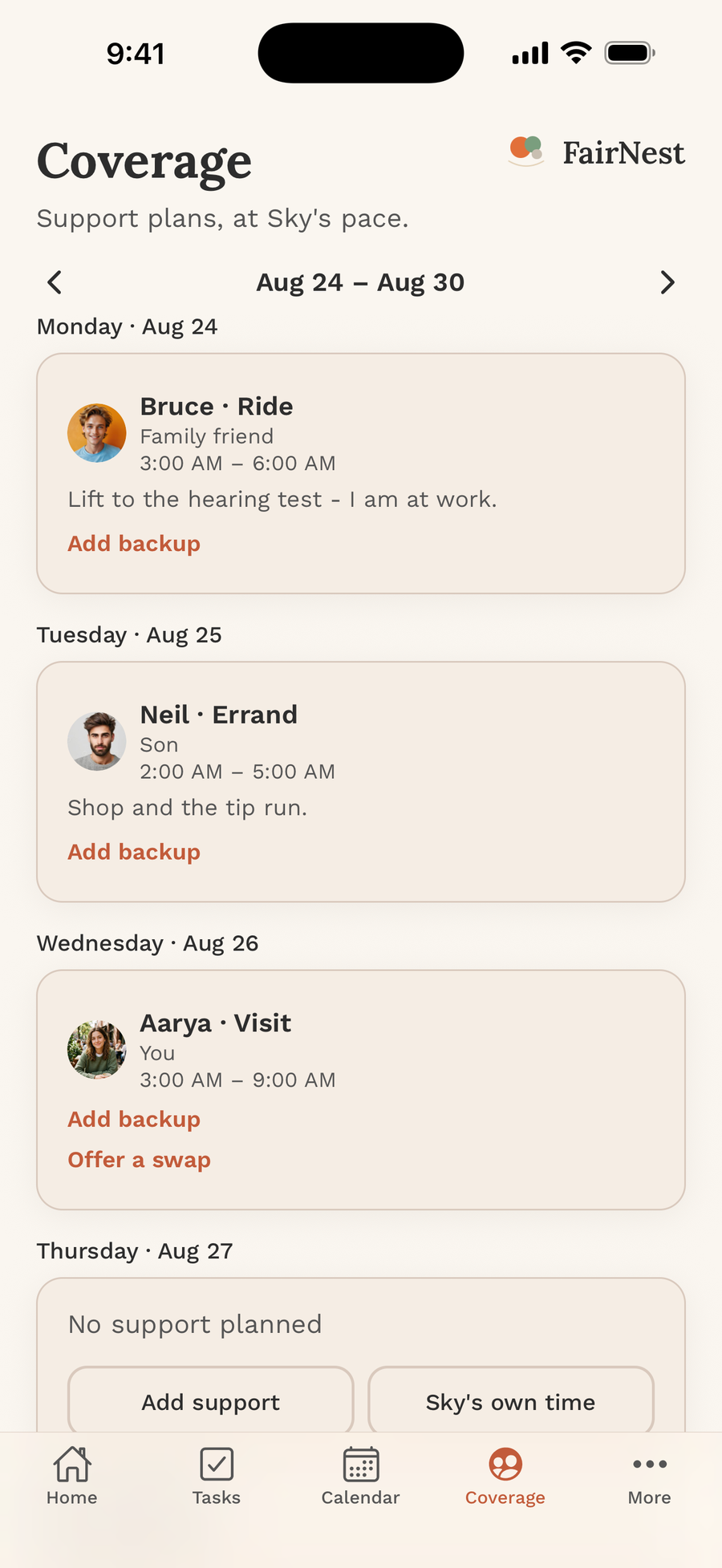
Instead, name one person per job, per day. Your sister covers Monday and Tuesday visits. Your brother handles the Wednesday grocery run. The neighbor checks in Thursday evening. It doesn't have to be perfectly fair — it has to be perfectly clear. When everyone can see the plan, nobody has to wonder whether someone else already handled it, and nobody has to text you to ask.
Be honest, too, about what you can't cover from the road. If you'll be without signal, say so and name the backup decision-maker. Families get into trouble not when things go wrong, but when nobody knows who's allowed to decide what to do about it.
What should I tell my stand-in caregiver to call me about?
Before you leave, tell your stand-ins exactly what counts as a call, a text, and a wait-until-you're-home.
A call means: a fall, a hospital visit, a medication mistake, or anything that scares them. A text means: a small change worth knowing about, like a missed meal or a restless night. Everything else can wait for your regular check-in. Without this list, every minor question becomes a phone call, and you spend your vacation watching your phone instead of resting — which defeats the entire purpose of going.
Agree on one check-in rhythm, too: one short update each evening beats ten scattered texts a day, and gives you permission to put the phone down the rest of the time.
Do a trial run before the real thing
If you can, have your stand-in do one visit or one day while you're still in town. Let them shadow you, or let them take the lead while you're available for questions. You'll discover the gaps fast: the pill organizer that only makes sense if you know the trick to opening it, the front door that sticks and needs a firm push.
A trial run also reassures your parent: a familiar face feels like a plan, not a surprise.
Why I built FairNest: the handoff shouldn't live in one person's head
This is the exact problem that pushed me to build FairNest, my own app. I kept watching families run their entire care plan out of one person's memory and one chaotic group chat. The person holding it all together could never truly step away, because stepping away meant everything fell apart.
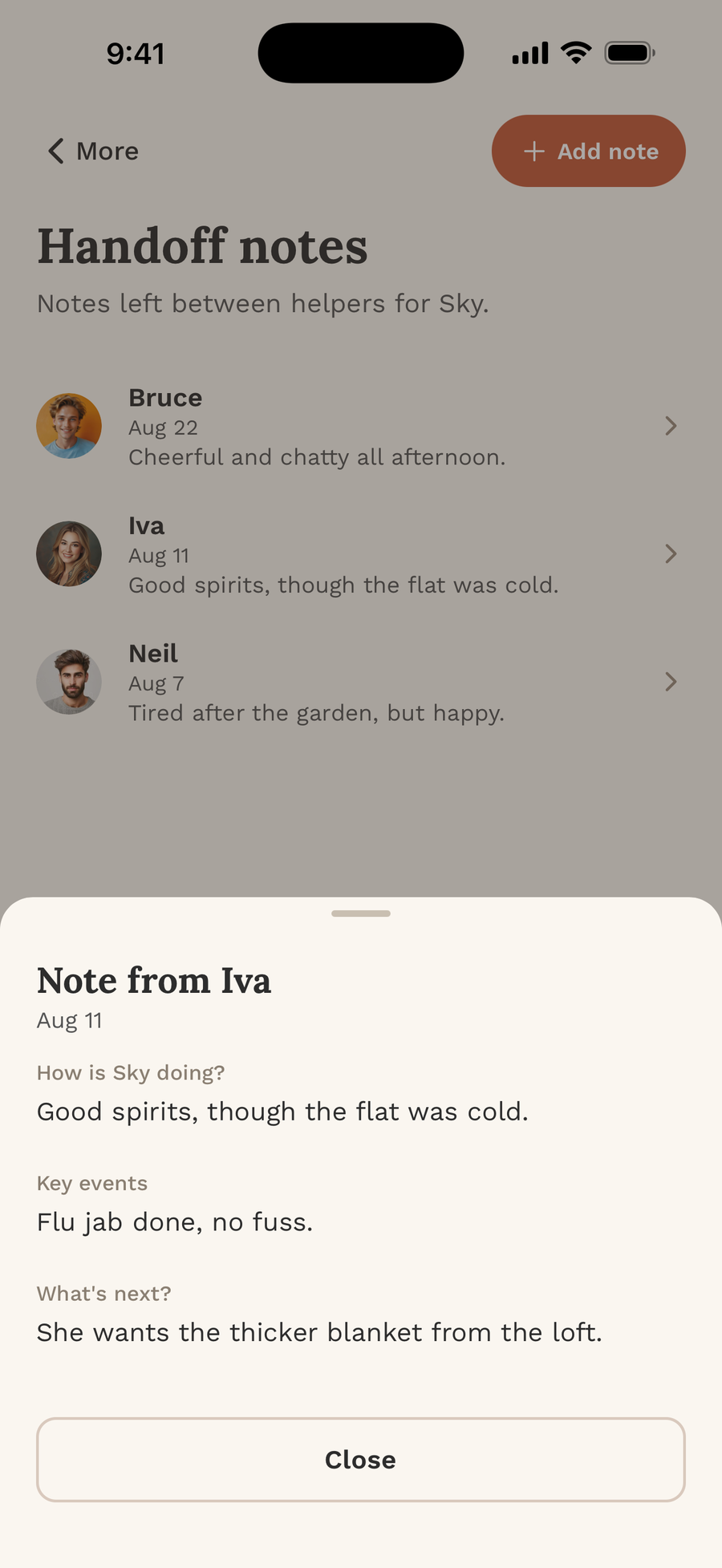
FairNest gives your family a shared Nest: one place for tasks, coverage, updates, and handoff notes, so the plan doesn't live in one person's head. Before a trip, you can write the handoff note once, set out who covers which days, and let everyone see the same plan. You can learn more at FairNest, and the app is free to try on iPhone here and on Android on Google Play here.
Bottom line
Bottom line: a vacation handoff comes down to three things. Write down the daily rhythm and the practical details — not everything you know, just what a stand-in would need at 8 p.m. on a Tuesday. Assign every job to a named person on a named day, so coverage is clear instead of assumed. And agree on what deserves a call, what deserves a text, and when the daily update arrives, so your phone stays quiet the rest of the time.
You deserve a real break, your parent deserves steady care while you're gone, and the people stepping in deserve a plan that lets them help without guessing. Put it in writing, hand it over, and then go.
You can follow along with more caregiving ideas on Instagram at @fairnestapp, and find FairNest at our website. Rest well. You've earned the trip.