
Almost no family pays for in-home care for aging parents out of a single pocket. Start by pricing the real hours you need, check whether long-term care insurance, veterans benefits, or a state Medicaid waiver program can help, and agree on how siblings will split the cost before the first invoice arrives. Medicare covers only short-term skilled home health care — not ongoing help with bathing, cooking, or companionship.
Imagine this: say your mom has always been fiercely independent, but lately the stairs are getting harder, the laundry piles up, and you're starting to wonder whether she should have someone coming in a few times a week. You call a home care agency for a quote, and the number makes your stomach drop. How to pay for in-home care for aging parents is a question most families hit sideways — not in a calm planning meeting, but mid-worry, quote in one hand and a parent insisting she's fine in the other.
Here's the reassuring part: almost no family pays for home care out of a single pocket, and there are more options than most people know. The first step isn't finding the money — it's understanding what you're actually paying for.
How to pay for in-home care for aging parents: start with the real cost
Home care is usually priced by the hour, so the total depends on hours per week. A few hours of help with meals, laundry, and errands costs a fraction of full daytime coverage — and a small amount of help, consistently, is often enough to keep a parent safe at home. Before you panic about the biggest number on the quote sheet, ask the agency to price a light schedule, a medium one, and full coverage. The light version may buy a lot of peace of mind.
Also get more than one quote. Rates, minimum hours, and inclusions vary widely, and a second conversation often reveals options the first didn't mention.
What are the main ways families pay for in-home care?
1. Out of pocket, split between family. This is the most common path, and the one that causes the most friction. The fix is to agree on the split before the first invoice arrives, not after. Some split evenly; others by income; others count hands-on hours as part of someone's contribution. There's no single fair answer — but there is one unfair pattern: one sibling quietly paying everything and resenting everyone else for it. Put it in writing — even a shared note everyone can see — and revisit it as needs change.
2. Long-term care insurance, if your parent has it. If your mom or dad bought a policy years ago, dig it out of the drawer now. Policies differ enormously — some cover home care, some only facility care, and many have waiting periods or daily limits. Call the insurer and ask, plainly: does this cover in-home care, how much per day, and what paperwork triggers a claim?
3. Veterans benefits and state programs. If your parent served, they may qualify for benefits that help with home care costs — ask the VA or a veterans service organization; many families never realize this door exists. Separately, many states run Medicaid waiver programs that help cover home care for people with limited income and assets, with rules and waitlists varying by state. Your local Area Agency on Aging — every county has one — can tell you what's available where your parent lives, often for free.
4. What Medicare does and doesn't do. This trips up the most families. Medicare generally covers short-term, skilled home health care after a hospital stay, but it generally does not pay for ongoing, non-medical help like bathing, cooking, or companionship. Knowing that now saves you from budgeting around money that isn't coming.
How to split the bill without splitting the family
Money fights in caregiving are rarely really about money. They're about feeling unseen — the sibling doing the driving resents the one who just writes a check, and vice versa. The antidote is visibility: everyone sees the same costs, hours, and contributions, hands-on and financial alike.
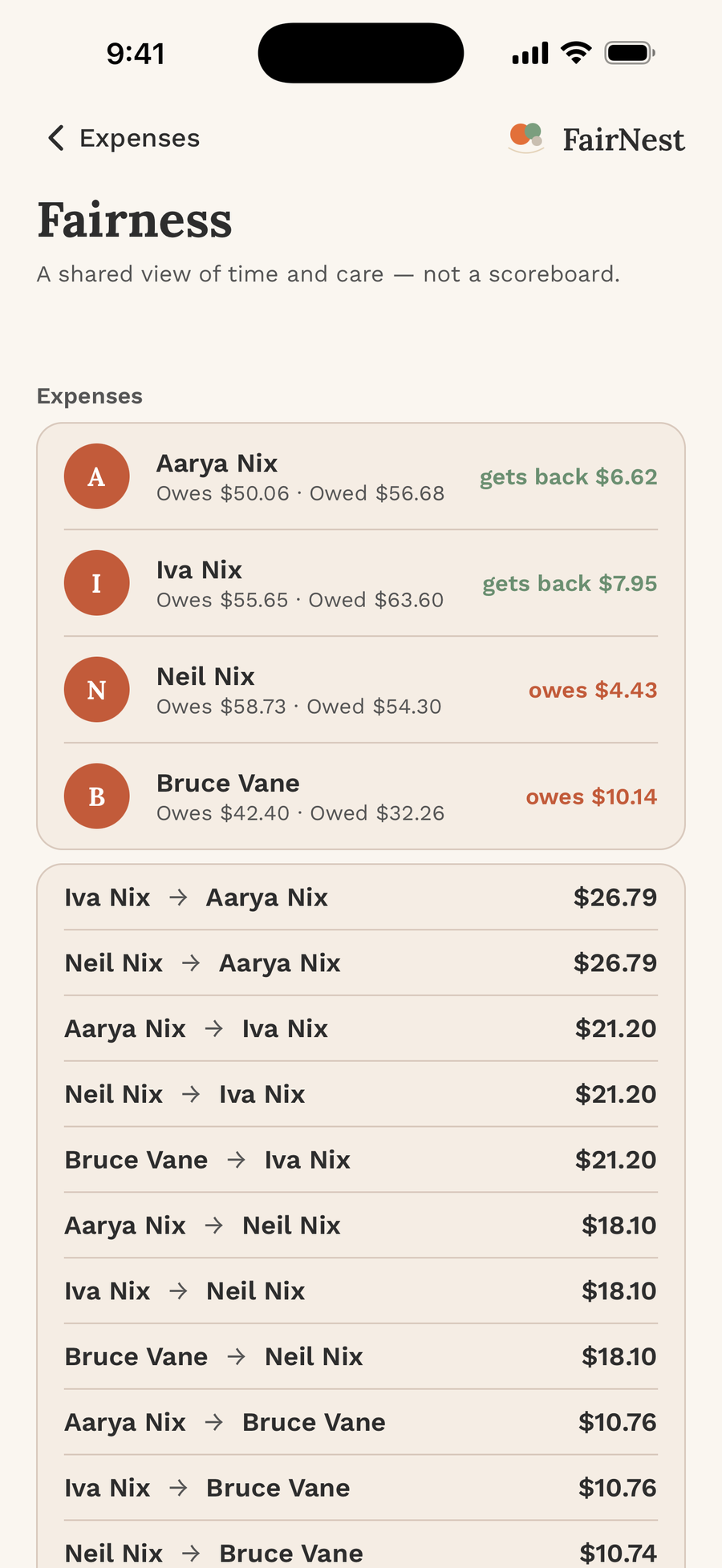
That's a big part of why I built FairNest, my own app for families coordinating care. It has cost splitting inside a shared family "Nest" — every expense logged in one place, split transparently, so nobody chases receipts. When the money is visible, the conversation gets calmer. You can find it at getfairnest.com, and it's on the App Store here: https://apple.co/4xRXJuq and on Google Play here: https://play.google.com/store/apps/details?id=com.bizvizorllc.fairnest
What should I ask before hiring a home care agency?
Whether you go through an agency or hire independently, ask these before the first visit:
- Who is the backup? If the regular caregiver is sick, does someone else come, or does your parent just go without help that day?
- What's actually included? Housekeeping, meals, rides, medication reminders — get the list in writing, not as a vague promise.
- How are caregivers screened and trained? Ask about background checks and what happens if the match isn't right.
- How do hours flex? Can you add a visit during a bad week and scale back during a good one without penalties?
- Who do you call at 9 p.m.? There should be a real answer to this, not a voicemail box.
This is general information, not financial advice — talk to a financial advisor or elder-law attorney before making decisions about benefits or a parent's assets.
Bottom line
Bottom line: paying for in-home care feels overwhelming because it arrives bundled with worry, guilt, and sibling dynamics — but it gets manageable when you break it apart. Price the real hours, check the policy in the drawer, call the free local agency, and agree on the split out loud before resentment writes it for you. No single source pays for everything, so the plan is usually a mix — and the mix works best when everyone can see it.
Your parent doesn't need you to solve the whole future this week. They need a few good hours of help, a plan the family can see, and the knowledge that nobody is carrying this alone. That's a very good place to start — and if it helps to keep costs, coverage, and handoffs in one shared place, that's exactly what I built FairNest for. You can also follow along at https://www.instagram.com/fairnestapp/ for more practical stuff that actually makes caregiving work.