
When siblings disagree about a parent's care, the fastest way forward is to name what each person is actually worried about, bring shared observations instead of verdicts, and agree on one small step with a date to revisit it. Most sibling fights about elder care aren't really about the decision on the table — they're about different fears, different information, and different amounts of hands-on caregiving. Start from the same notes, and the conversation changes.
Imagine this: it's a Sunday night family call, and it starts out fine. Then someone says it — say your mom shouldn't be living alone anymore — and the call goes sideways. One sibling says she's managing just fine and moving her would break her heart. Another says the stove left on last week proves she isn't. Nobody is being cruel. Everybody loves your mom. And yet, by the end of the call, you're further apart than when you started. If you've ever wondered what to do when siblings disagree about your parent's care, that stuck feeling is usually where it starts.
Here's the part most families miss: the argument you're having is almost never the argument you think you're having. The surface question — should Mom move, should Dad stop driving, should we hire help — is real, but underneath it are heavier questions. Who feels guilty? Who's exhausted? Who's scared? Who's the one actually showing up every day, and who only sees the good days? Until you name what's underneath, you'll keep re-arguing the surface question and getting nowhere.
How do you handle it when siblings disagree about a parent's care?
Try this on your next call, before anyone proposes a solution: ask each person to finish one sentence. "What I'm most worried about is…" You'll often find you agree far more than the argument suggested. One sibling is worried about safety, another about taking away independence, a third about money or about being left holding everything if a plan falls apart. Those aren't opposing positions. They're all legitimate worries about the same person, and naming them turns opponents back into teammates.
It also helps to say the quiet part out loud: distance changes what you see. The sibling who lives nearby sees the hard Tuesday afternoons; the sibling far away sees the cheerful Sunday phone calls. Neither view is wrong, and neither is complete.
How do I talk to my siblings about Mom's care without a fight?
The fastest way to end a care argument is to walk in with a verdict: "Mom can't live alone anymore." Even if you're right, a verdict invites a defense, not a discussion. Observations do the opposite. "Mom left the stove on twice this month, and she missed two doses last week" is something everyone can look at together — a fact to solve, not a position to attack.
So before the next conversation, gather the specifics: what happened, when, and who saw it. Write them down in one place everyone can see — not in a side text thread between two siblings, which is how the third sibling ends up feeling ambushed. A shared list of observations, without anyone's conclusion stapled to the top, lets the family argue about the evidence instead of about each other.
Let your parent's voice be the loudest one in the room
In the middle of a sibling disagreement, it's easy to forget the person at the center of it. Your parent isn't a problem to solve — they're an adult with preferences, fears, and a lifetime of knowing their own life. Ask them directly: "What part of the day feels hardest right now? What are you most worried about losing?" You may be surprised. The parent everyone assumed would fight a move might be exhausted by the house; the parent everyone assumed needed help might have one specific fear — the stairs at night, say — that one small fix could solve.
This doesn't mean your parent gets the only vote. But a plan your parent understands and accepts will hold; a plan imposed on them by a divided family rarely does.
What do you do when siblings can't agree on a parent's care?
When siblings can't agree on the big decision, don't force the big decision. Pick the smallest step everyone can live with, and put a review date on it. If one sibling wants full-time help and another wants nothing to change, try a few hours of help a week for a month, then look at what actually happened.
The review date is the secret ingredient. It lets the cautious sibling agree without feeling railroaded, because nothing is permanent, and it lets the worried sibling agree without feeling ignored, because the concern is on the calendar, not dismissed. It replaces "we'll see" — which really means "we'll fight about this again" — with "we'll decide on a set date, with a month of notes in front of us."
Why I built FairNest for the family that can't agree yet
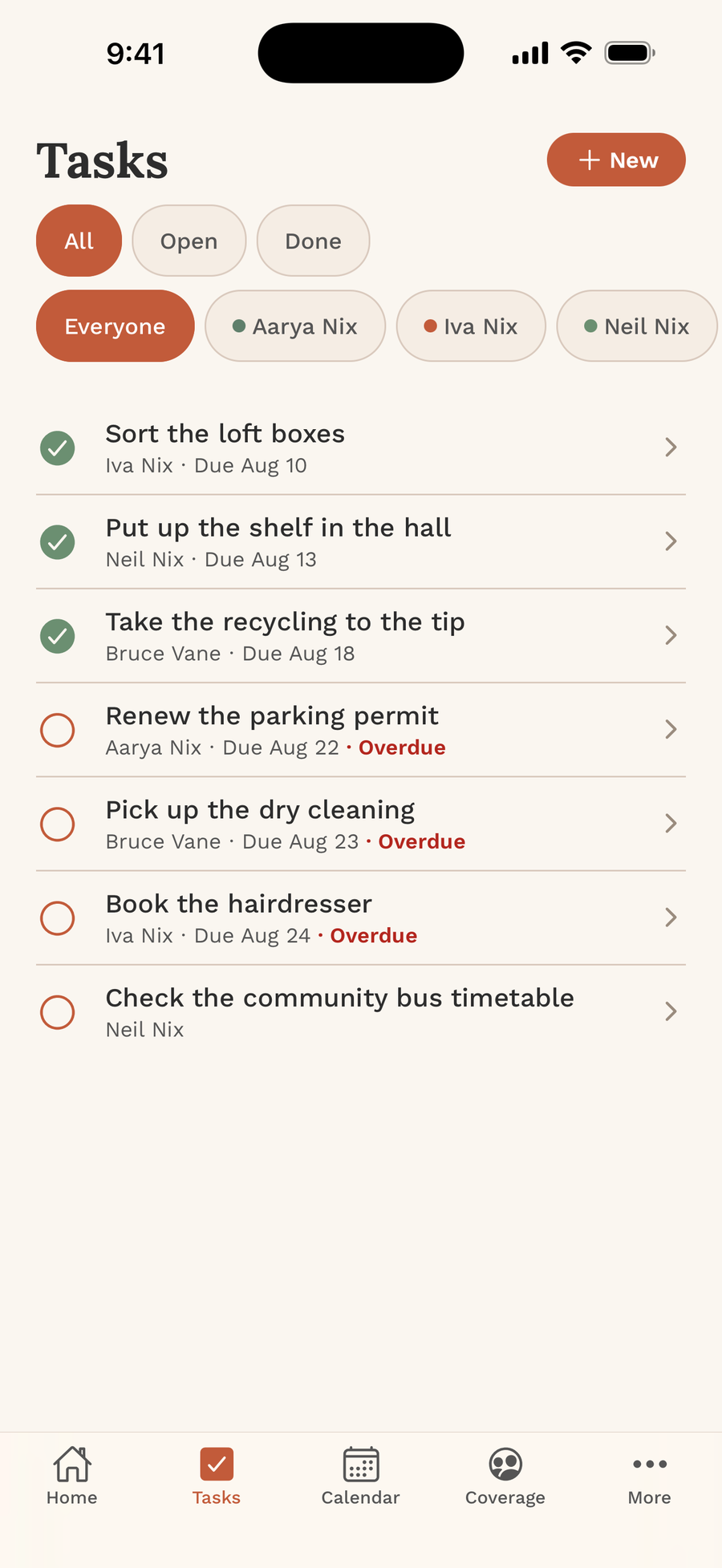
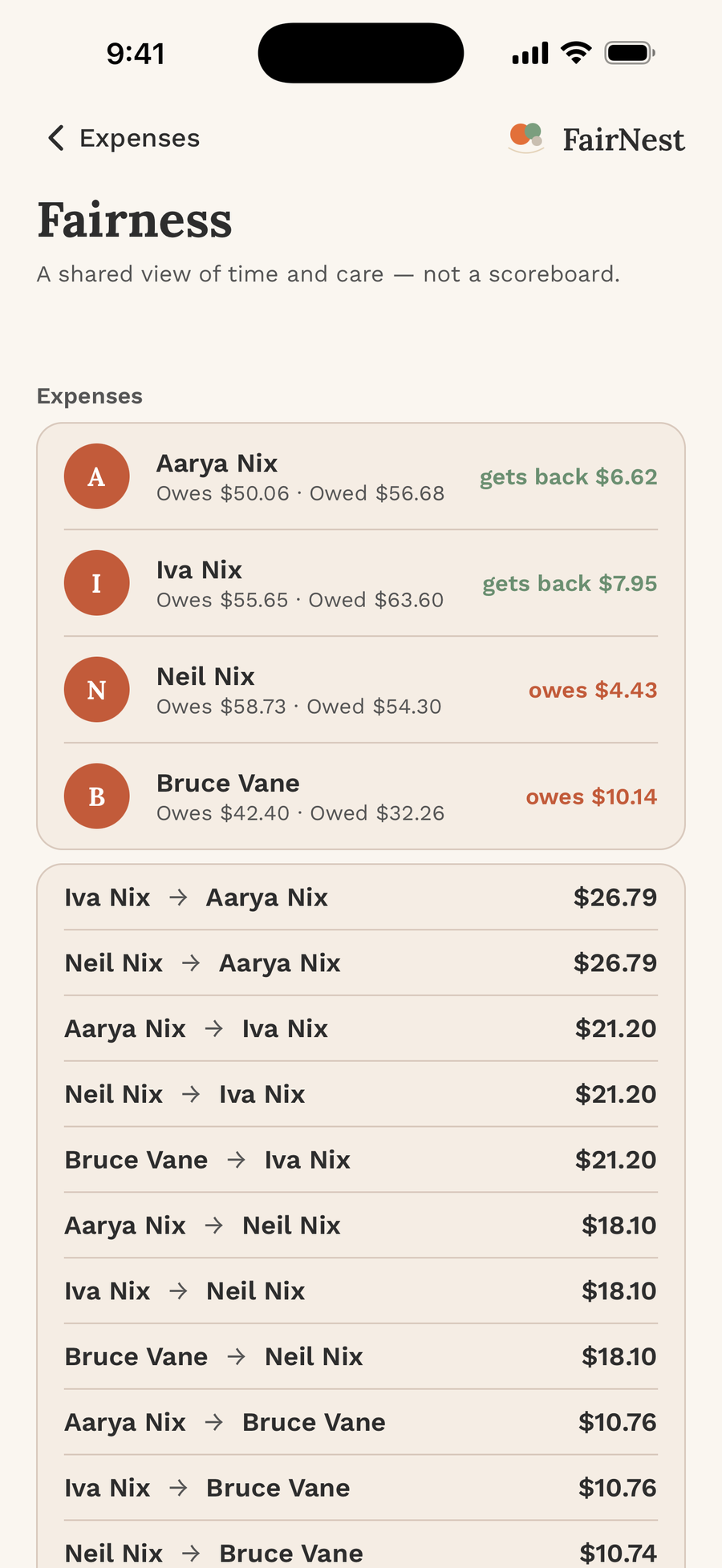
This is exactly why I built FairNest — my own app. Sibling arguments get worse when everyone works from different information: one sibling saw the stove incident, another heard about the missed medication, and nobody has the full picture in one place. A shared Nest gives the family one place for tasks, coverage, updates, and handoff notes, so the next conversation starts from the same notes instead of competing memories.
Bottom line
Bottom line: when siblings disagree about a parent's care, the disagreement is usually about different worries and different information, not about loving your parent less. Name the worry underneath, argue from shared observations instead of competing memories, and agree on one small step with a date to revisit it — that's how a stuck family starts moving again.
So the next time the call goes sideways, pause the verdict and ask about the worry underneath it. Bring what you've actually seen, not just what you've concluded. Ask your parent what the hard part of the day really is. And agree on one small step, with a date to look at it again. Families don't need to agree on everything to take care of someone well. They just need to keep talking, keep noticing, and keep the person they love at the center of it.
This is general information, not medical or legal advice — talk to your parent's doctor or a qualified professional about what's right for them. If your family wants one shared place to keep the same notes instead of arguing from different ones, see how a Nest works at getfairnest.com, or find FairNest on the App Store here: https://apple.co/4xRXJuq and on Google Play here: https://play.google.com/store/apps/details?id=com.bizvizorllc.fairnest. You can also follow along on Instagram at https://www.instagram.com/fairnestapp/.