
To tell if your parent can still live alone safely, walk through the house on your next visit and check the kitchen, the bathroom and bedroom, the mail pile and medicine cabinet, and the front door — then look for a pattern across visits, not one big sign. One area struggling usually means one fix; several areas slipping at once usually means the overall load of living alone has gotten too heavy.
Imagine this: you pull into your mom's driveway, and before you've even knocked, something feels slightly off. The porch light is on at noon, and there's a stack of unopened mail by the door. Inside, the house looks fine at a glance — but the fridge holds milk two weeks past its date, and there's a scorch mark on the tea towel near the stove. Nothing dramatic. Nothing you could point to in a family meeting and call a crisis. And yet, on the drive home, one question loops in your head: how to tell if your parent can still live alone safely?
If that drive home sounds familiar, you're not overreacting. Most families don't get a single clear moment that answers the question — they get a slow accumulation of small signs, and the hard part is knowing which ones matter. Here's a practical way to look, so the next visit gives you answers instead of just worry.
What should I look for on a visit to tell if my parent can still live alone safely?
Don't judge the whole situation at once. Walk through the house the way a careful guest would, checking where daily life actually happens.
The kitchen tells the truth first. Open the fridge and see whether eating is still working. Is there fresh food, or mostly condiments and leftovers going soft? Has the stove gone quiet while takeout boxes pile up? A parent who used to cook and now mostly snacks isn't necessarily unsafe — but it's a change worth noticing, especially with weight loss or skipped meals.
The bathroom and bedroom tell you about mobility. Look for quiet adaptations: laundry piling up because the stairs feel harder, slip-on shoes replacing ones that need bending. Ask, gently, about falls — including the ones they brushed off. "Have you had any close calls lately?" lands better than "Have you fallen?" and usually gets a more honest answer.
The mail pile and the medicine cabinet tell you about the systems. Unopened bills or duplicate charges can signal that the paperwork side of life is getting heavy. In the medicine cabinet, look for the practical stuff: pills sorted or scattered, refills picked up on time, bottles that ran out days ago. Nobody needs a perfect system. The question is whether it still holds when they're tired or unwell.
The front door tells you about the outside world. Is your parent still driving to the places they love, or quietly narrowing their world to the house and the nearest store? Are friends still calling, or has the calendar gone blank? Isolation is easy to miss because it looks like peace and quiet — until a small problem becomes a big one because nobody noticed.
How do I know if it's a pattern and not just one bad day?
One burnt tea towel is not a verdict. One missed bill is not a verdict. What matters is the pattern across a few visits: is the same kind of thing going wrong in more than one area — food, medication, money, mobility, connection? One area struggling usually means one fix. Several areas slipping at once usually means the overall load of living alone has gotten too heavy.
Raise it in small conversations, not one big summit: "I noticed the fridge was pretty empty — want me to set up grocery delivery?" lands better than "We need to talk about you moving," which tends to shut the whole topic down for months.
What do I do if the answer is "mostly, but…"?
Most of the time, the honest answer is "mostly, but…" — mostly fine, but the stairs are getting harder; mostly fine, but the evenings feel lonely. That's good news: the space between "fully independent" and "needs to move" is wide, and full of middle options worth trying first.
Start with the smallest fix for the biggest risk: a weekly grocery delivery, a medication organizer the whole family can see, a neighbor with a spare key, a standing Tuesday call. Agree on who covers what, and write it down somewhere everyone can find it — a plan that lives only in one sibling's head falls apart the first time that sibling gets sick or goes on vacation.
And revisit the question on a schedule, not just when something scares you. A quick version of this walkthrough every month or two turns a dreaded verdict into an ordinary check-in. Ask them directly: "What part of the day feels hardest right now?"
Why I built FairNest around this exact question
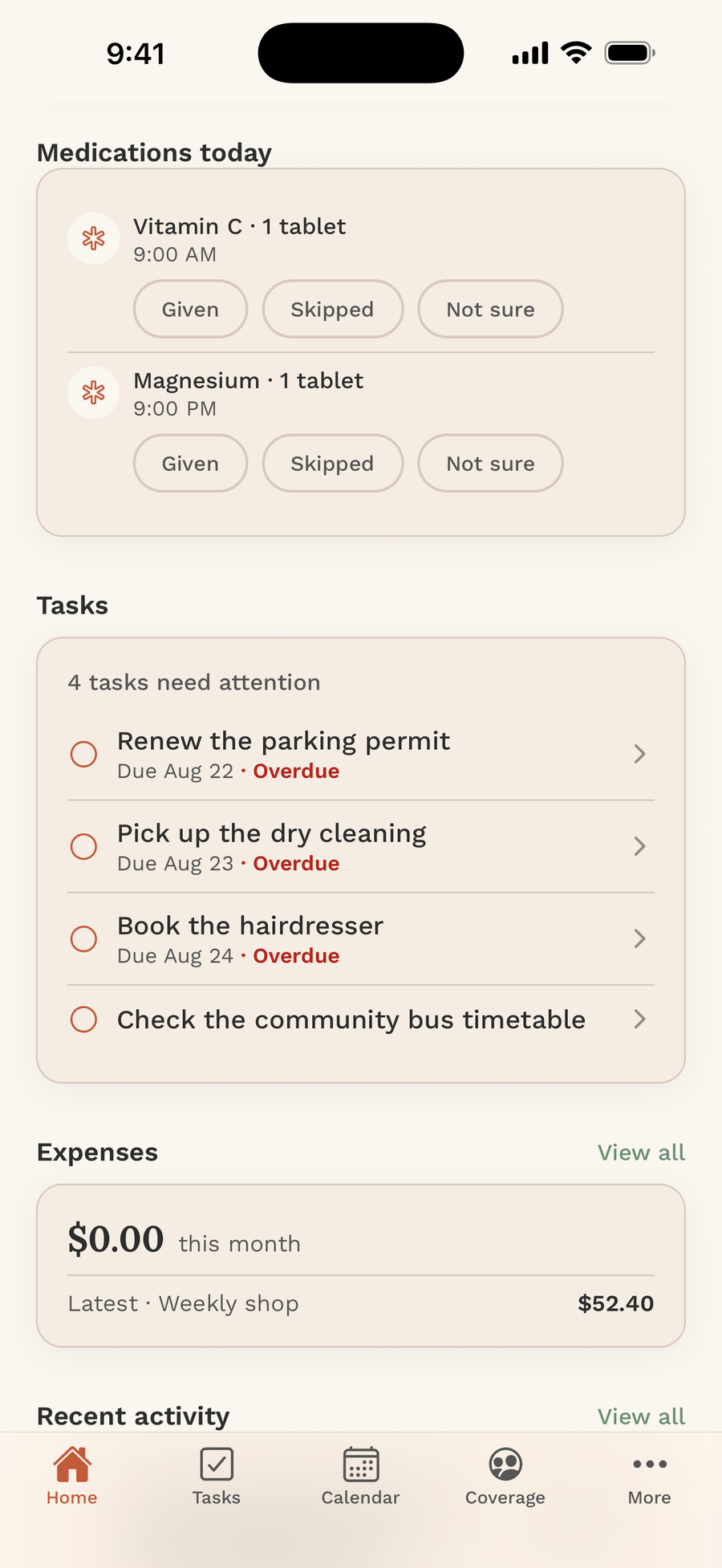
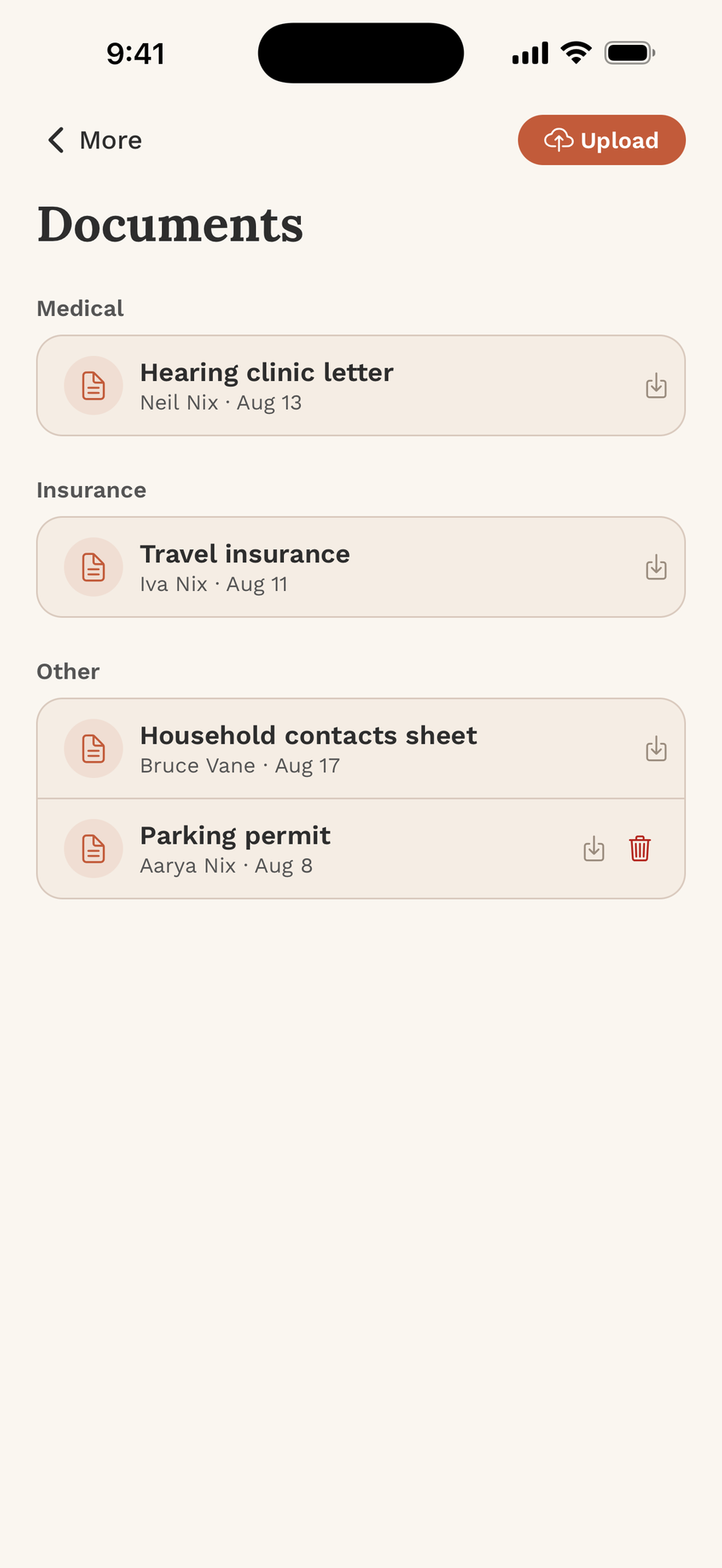
This is the kind of slow, shared noticing that a family group chat is terrible at. One sibling sees the empty fridge, another hears about the missed bill, and nobody puts the pieces together — until a crisis does it for them. I built FairNest — my own app — so a family gets one shared Nest for this: tasks, coverage, updates, and handoff notes in one place, so what each person notices reaches everyone else. Next time the question comes up, you're deciding from shared notes, not competing memories of one visit.
So on your next visit, take the slow walk through the house — kitchen, mail, calendar, stairs. Then talk about what you found the way you'd want someone to talk to you: with respect for everything your parent still does well, and a plan for the parts getting harder. Living alone safely isn't a yes-or-no verdict. It's a question worth asking often, kindly, and before it becomes urgent.
Bottom line
The signs an elderly parent can't live alone anymore rarely arrive as one dramatic moment — they accumulate as small changes across the kitchen, the mail, the medicine cabinet, and the calendar. Use this aging in place safety checklist on a regular visit, ask yourself honestly "is my parent safe living alone?", and watch for elderly parent living alone warning signs as a pattern, not a verdict. When should an elderly parent stop living alone is a question worth asking often, kindly, and before it becomes urgent.
This is general information, not medical or legal advice — talk to your parent's doctor or a qualified professional about what's right for them. If your family wants one shared place to keep track of what everyone notices, see how a Nest works at getfairnest.com, or find FairNest on the App Store here: https://apple.co/4xRXJuq and on Google Play here: https://play.google.com/store/apps/details?id=com.bizvizorllc.fairnest. You can also follow along on Instagram at https://www.instagram.com/fairnestapp/.