
The legal documents you need for aging parents are a healthcare decision-maker form — called a healthcare power of attorney or medical power of attorney in many states — an advance directive or living will, a HIPAA release, a durable financial power of attorney, and a will, plus a one-page list of where the originals live. Get them signed while your parent still has capacity to sign, keep copies where the right people can find them, and review them after any big change.
Imagine your dad ends up in the emergency room after a fall on a Tuesday night. He's groggy, a doctor asks who can make medical decisions if he can't, and your sister texts from another state: "Doesn't Mom have that form somewhere?" If you're searching what legal documents do I need for aging parents, it's usually because of a moment like that — or because you want to avoid it.
You don't need to become a lawyer this week. You need a small set of papers, signed while your parent can still sign them, stored where the right people can find them. This checklist walks through what those papers are, in plain English, so you can start while it's still calm.
This is general information only, not legal advice — talk to an attorney in your parent's state about what's right for your family, because these rules vary by state.
What legal documents do I need for aging parents, in plain English
Think in two halves: health decisions and money decisions. A crisis pulls on one or both, and a document for one doesn't cover the other.
1. A healthcare decision-maker form Called a healthcare proxy, medical power of attorney, or healthcare agent form depending on your state, it names who can make medical decisions if your parent can't communicate. Without it, even close family can hit a wall at the hospital. Name one person first, and a backup second — that backup matters.
2. An advance directive or living will Your parent's own instructions about care they would or wouldn't want in serious situations. It guides the decision-maker above, and takes pressure off you: you're following their wishes, not guessing under stress. States combine these forms differently, so ask what yours uses.
3. A HIPAA release Privacy rules can stop doctors from sharing information, even with adult children helping with care. A signed release gives the people your parent chooses permission to hear updates and ask questions. Many hospitals have their own version — sign theirs too.
4. A durable financial power of attorney This names someone to pay bills, talk to a bank, and handle insurance paperwork if your parent can't. "Durable" is the key word: in many states it means authority continues if your parent becomes incapacitated. A non-durable form may stop working exactly when you need it — which is why this one needs an attorney's eye.
5. A will, and a where-everything-lives list A will covers property after death — different from the forms above, which work while your parent is alive. Alongside it, keep a one-page list: where the originals are, who the attorney and doctors are, where account and insurance information lives, and any final wishes shared. Not legally binding on its own, but priceless on a hard night.
How do I get my parents' legal documents signed without a family fight?
Knowing the list is easy. Getting it signed is where families stall. A few things help.
Start with values, not forms. "What would you want if you couldn't tell the doctors yourself?" feels human. Leading with paperwork makes many parents hear "we're taking over," when you mean the opposite — you're protecting their choices.
Do it while there's no deadline. These documents generally must be signed while your parent has capacity to understand them. Waiting until after a diagnosis or hospital stay can make it far harder, sometimes too late. A quiet month is the best time you'll get.
Use the right help, once. State forms, witnessing, and notarization are where DIY goes wrong. A short visit with an elder law or estate attorney — or a legal aid clinic if cost is a concern — can confirm everything is valid where your parent lives.
Make copies findable. A perfect document in a locked drawer helps no one. Give copies to the named decision-makers, leave a set with your parent's doctor if they'll take it, and tell at least two people where the originals live.
Review after big changes. A move, a death in the family, or a major health change is a prompt to re-read everything. A five-minute review once a year keeps the papers true.
Why I built FairNest
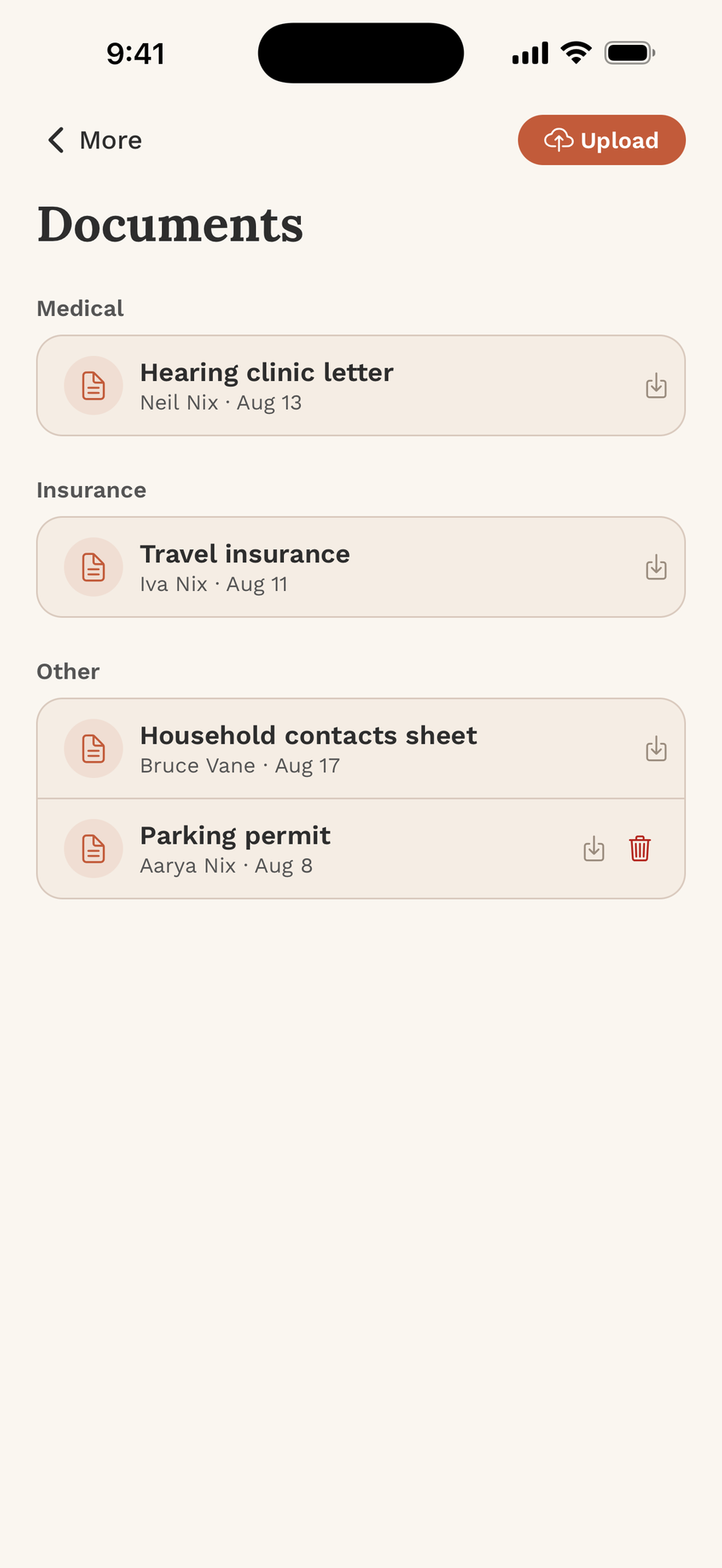
I built FairNest, my own app, because even after signing, the organizing falls apart. Who has a copy? Who's calling the attorney back? Those loose ends live in separate texts and memories.
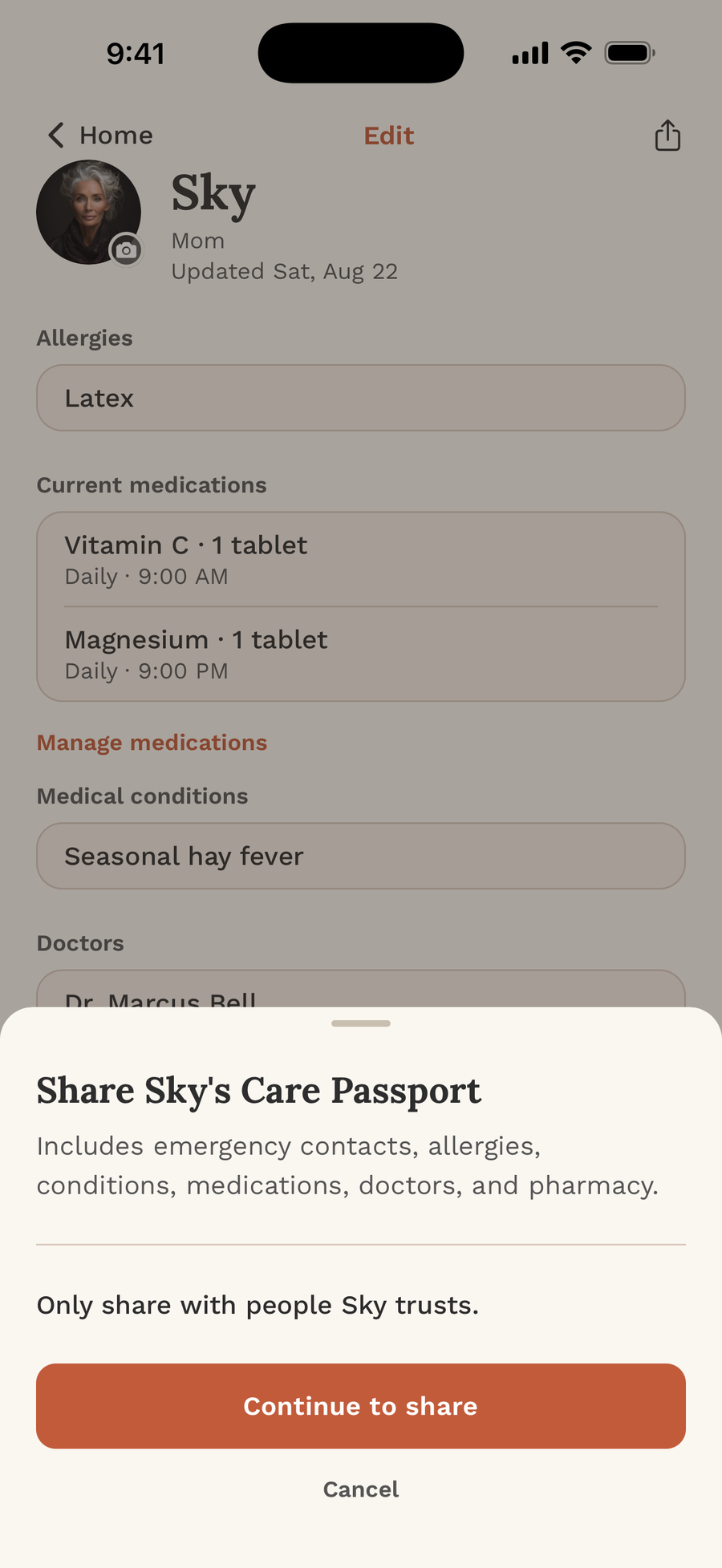
FairNest gives a family one shared Nest for tasks, coverage, updates, and handoff notes — so "originals are in the blue folder at Mom's, Sarah has copies" becomes a note everyone can find, and "book the attorney review" becomes a task with one name on it, alongside med tracking and cost splitting. See how it works at getfairnest.com.
You don't need an app for the checklist. A folder, a few honest conversations, and one attorney visit will do it. What matters is that one person isn't holding all the information.
When is the best time to get legal documents for aging parents?
If this feels heavy, shrink it to one step: pick a calm half hour, ask who they'd want making decisions if they couldn't, and write it down. That's the start of every document here.
You're not planning for the worst because you expect it. You're planning so that if a hard day comes, you can spend it being your parent's child — present, holding their hand — instead of searching a house for a form you were sure existed somewhere.
Bottom line
This elder law documents checklist is short on purpose — five papers, signed while your parent can still sign them, stored where the right people can find them. Start with one calm conversation about who they'd want making decisions, and let that answer lead you to the forms. Planning now is what lets you spend a hard day being your parent's child instead of searching a house for a form.
FairNest is the family caregiving app I built for exactly this kind of shared planning — one Nest for tasks, handoffs, and the details everyone needs. Download FairNest on the App Store or on Google Play, and follow along on Instagram.