
A hospital discharge checklist for family caregivers covers five things: what happened and what warning signs to watch for, what changed with medications, which follow-ups are booked and which are on you, what daily care looks like for the first 48 hours, and who to call after hours. Leave with the answers written down in one place every helper can find — it's much easier to ask while the care team is still in front of you.
Imagine your mom has been in the hospital for three days, and a nurse smiles and says, "Good news — she can go home today." You feel relief first, then a quiet panic. Home to what? Which pills changed? Who checks the wound? What if she gets worse tonight? If you're searching for a hospital discharge checklist for family caregivers, you're probably standing in that exact moment — grateful she's coming home, and terrified of missing the one instruction that matters.
Discharge is not really an ending. It's a handoff — from a team that watched her around the clock to you, often with a stack of papers and ten minutes of explanation. You need to leave with clear answers, written down in one place everyone helping can find.
This isn't medical advice — talk to your parent's doctor and discharge team about what's right for them.
What should be on a hospital discharge checklist for family caregivers?
Work through these five areas before you leave the building. It's much easier to ask while the nurse and doctor are still in front of you than to call back from the kitchen at 9 p.m.
1. What happened, and what are we watching for now? Ask for the short version in plain language: Why was she admitted, what was treated, and what is still healing? Then ask the question families forget: "What warning signs should make us call you, go to urgent care, or call 911?" Write the answer down word for word. "A little more tired" and "suddenly confused or short of breath" lead to very different nights.
2. What changed with medications? Hospitals pause, stop, and start medicines all the time. Don't assume the list at home is still correct. Ask: Which home medicines should she restart, which should she stop, and which are new? For each new one: what is it for, when is it taken, and with food or not? Compare the discharge list against the bottles already at home that same day, and set the stopped ones aside so nobody gives them out of habit. This isn't medical advice — if the lists don't match, call the pharmacist or doctor before the next dose.
3. What follow-ups are already booked — and which ones are on you? "Follow up with your doctor in a week" can mean an appointment is booked, or it can mean you need to book it Monday morning. Ask which is true for every follow-up, test result, and referral. Write down the date, the office, and who is taking her. A follow-up nobody owns is a follow-up that quietly doesn't happen.
4. What does daily care actually look like this week? Can she shower? Climb stairs? Drive? Lift anything? What about diet, activity, wound care, or equipment like a walker or oxygen? These limits often live in small print. Ask for the first 48 hours specifically: "Walk me through tonight and tomorrow morning." That story will surface details a form never does — and it's the handoff your sibling covering tomorrow most needs to hear.
5. Who do we call, and where are the papers? Get one clear contact for questions after hours, not just the hospital's main number. Then gather the discharge summary, the new medication list, and any instructions in one folder, and take a photo of each page as a backup. If three people will be helping, all three need the same version.
Why does the handoff at home matter as much as the hospital handoff?
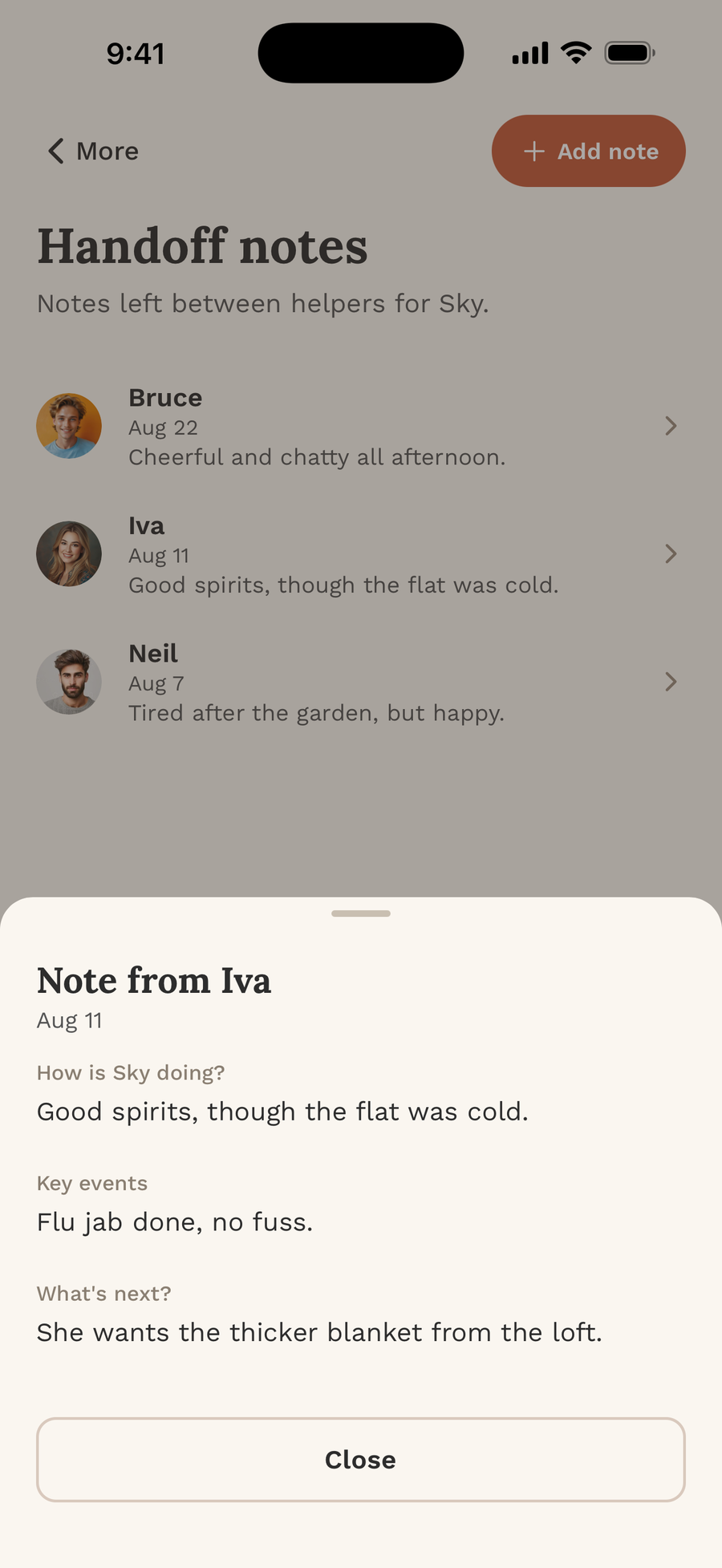
Here's what catches families off guard: even a perfect discharge conversation fades fast. You were tired, relieved, and listening while packing a bag. By Thursday, your brother is covering and he's working from your hurried text: "Mom's home, meds changed a bit, appt next week."
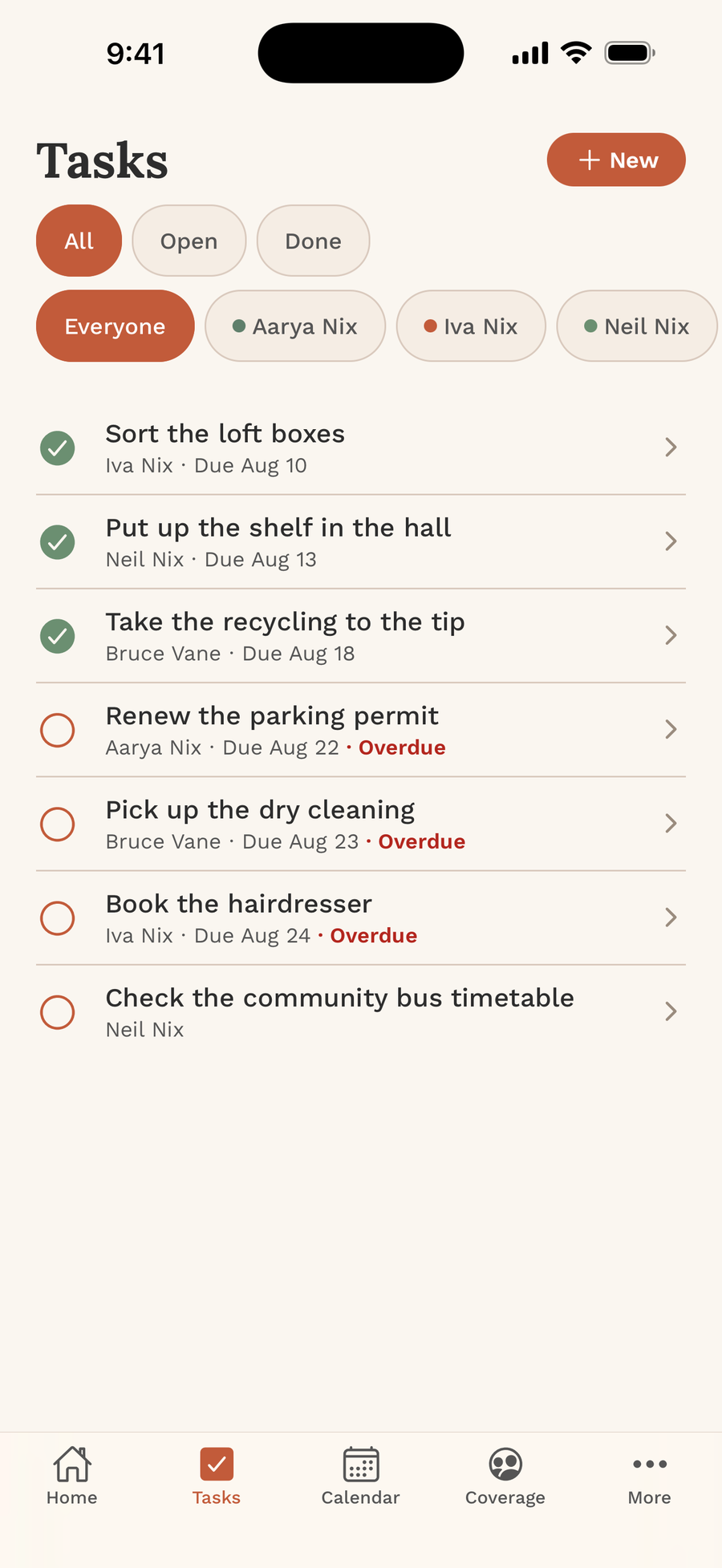
Do the second handoff that same evening, while it's fresh. Turn the papers into a short, shared note: what changed, what to watch for, what's next, and who owns each follow-up. Three to five plain lines beat ten pages nobody rereads. Put the follow-up appointments and the new tasks — pharmacy pickup, equipment return, first check-in call — on one shared calendar, each with a name next to it.
Why I built FairNest
I built FairNest, my own app, because this is exactly where family care tends to break — not in the big decisions, but in the handoff between them. One person hears the instructions and everyone else gets a summary of a summary. FairNest gives a family one shared Nest for handoff notes, tasks, coverage, updates, cost splitting, and med tracking, so the discharge note the hospital gave you becomes the note the person covering tomorrow actually reads. You can see how it works at getfairnest.com.
You don't need an app to do the checklist above. A notebook by the door will carry you a long way. What matters is that the information lives in one place, in writing, where the whole care team can find it at 2 a.m. without waking you up to ask.
How do I leave the hospital slower — and arrive home calmer?
It's tempting to rush discharge. Everyone is tired, and home sounds like relief. Take the extra fifteen minutes anyway. Ask the awkward repeat question. Read the medication list back out loud.
Coming home is the goal, of course. Coming home with a clear handoff is what makes staying home possible — and what lets everyone helping your parent start the week from the same page, instead of from four different memories.
Bottom line
Before you leave the hospital with your elderly parent, ask the five questions: what happened, what changed with medications, which follow-ups are booked, what the first 48 hours look like, and who to call. Keep the hospital discharge instructions for your elderly parent — medication changes after hospital discharge, follow-ups, and warning signs — in one shared place, so the handoff at home is as clear as the one at the hospital.
FairNest is the app I built for exactly these handoffs — one shared place for notes, tasks, and coverage after a hospital stay and every week after. Download FairNest on the App Store or on Google Play, and follow along on Instagram.