
When siblings won't help with parents, the problem usually isn't that they don't care — it's that "help" has stayed so vague that one person quietly became the entire system. Make the invisible work visible with a plain list, then replace "help more" with one small, specific job owned by one sibling, with a date on it.
Imagine it's 11 p.m. and you're sitting in your car outside your parent's house, too tired to drive home yet, typing "what to do when siblings won't help with parents" into your phone. You handled the appointment, the pharmacy, and the leaking sink again. Your brother said he was busy. Your sister didn't answer the group text at all.
If that's familiar, hear this first: the problem usually isn't that your siblings don't care. It's that "help" has stayed vague so long that one person — probably you — has quietly become the entire system. Vague help is easy to postpone. A specific job, owned by a named person, with a date on it, is much harder to drift away from. Here's how to reset things without starting a family war.
Step one: how do I make the invisible caregiving work visible?
Before you ask for anything, write down what caring actually involves this month. Not in an angry text. Just a plain list.
Say your dad needs rides to two appointments, someone to sort his weekly pills, someone to call the insurance company about a bill, groceries on Saturdays, and a check-in call most evenings. When that list lives only in your head, your siblings see a parent who seems fine and a sibling who seems to have it handled. They may genuinely not know how much there is.
Share the list calmly, without commentary about who hasn't done what. Let its size speak for itself. A list turns an argument about fairness into a practical question: there's this much to do — how do we split it up?
Step two: replace "help more" with one owned job
"Can you help more?" almost never works. It sounds like a judgment, it has no edges, and the other person can agree sincerely and still do nothing, because they don't know what "more" means on Tuesday.
Try one small, specific ask instead. Not five. One. Could you own the Saturday grocery run every week? Call Mom on Monday and Thursday evenings? Research the new clinic and book the first appointment by Friday?
Notice what those asks share: a clear task, a clear owner, and a clear rhythm or deadline. They also give your sibling a chance to say yes — or to tell you honestly what they can do instead. A sibling who can't do Saturdays might own the insurance calls from their couch three states away. That's not a cop-out. Paperwork, research, scheduling, regular calls, and a fair share of costs are all genuine care.
If someone won't commit to anything, that's useful information too, painful as it is. You can stop planning around help that isn't coming and build a plan that works without it.
Step three: make helping easy to start and hard to forget
A lot of sibling help dies in the logistics. Your sister is willing, but she doesn't have the pharmacy number, the gate code, or any idea when the appointment is. So every act of help routes through you first — which keeps you in the middle of everything.
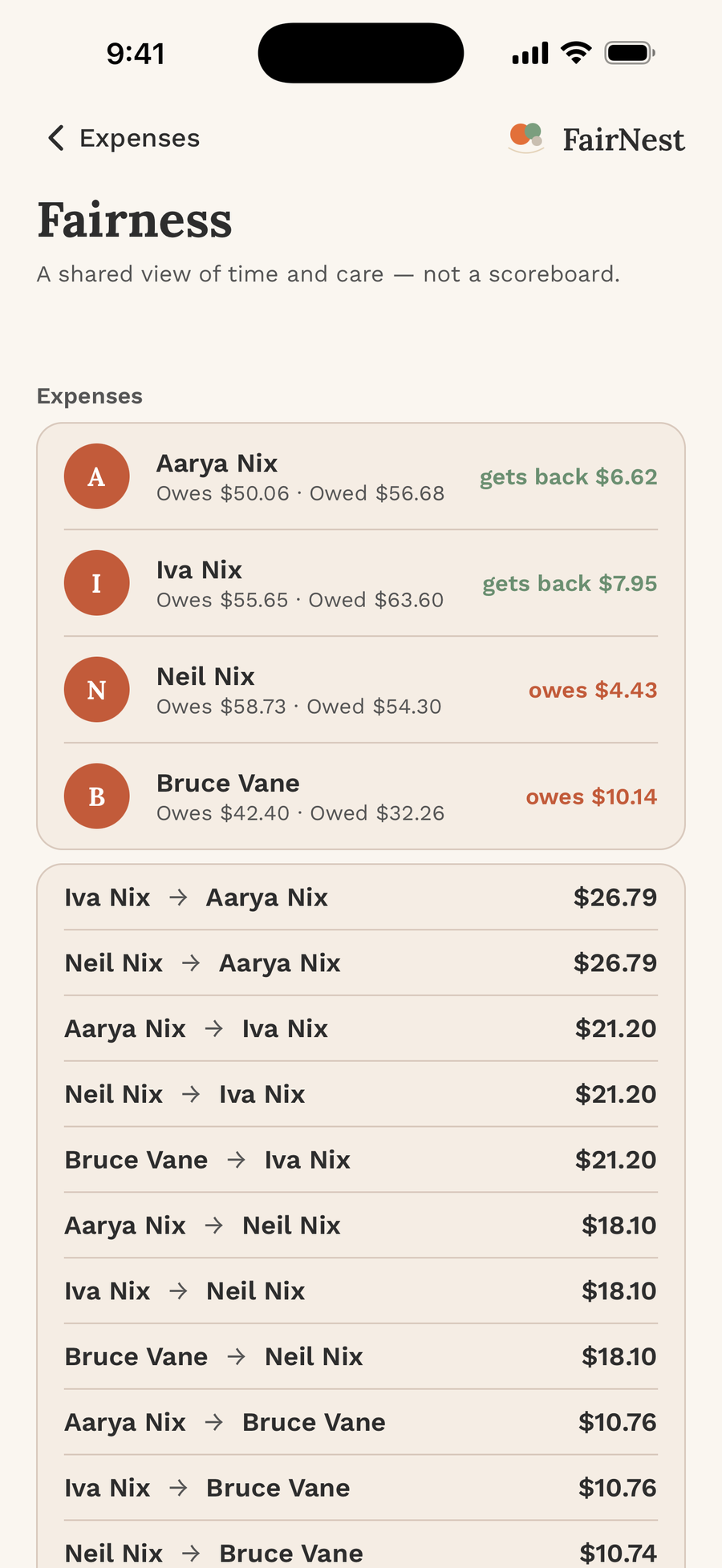
Put the basics where everyone can find them without asking you: the medication list, key phone numbers, appointment times, and who is covering what this week. When a sibling can just look, act, and mark something done, helping stops depending on your memory.
Why I built FairNest
This bottleneck is exactly why I built FairNest, my own app. In too many families, one sibling becomes the switchboard — every question, every update, every "wait, who's doing Thursday?" runs through them, until coordinating care becomes a second job on top of giving it.
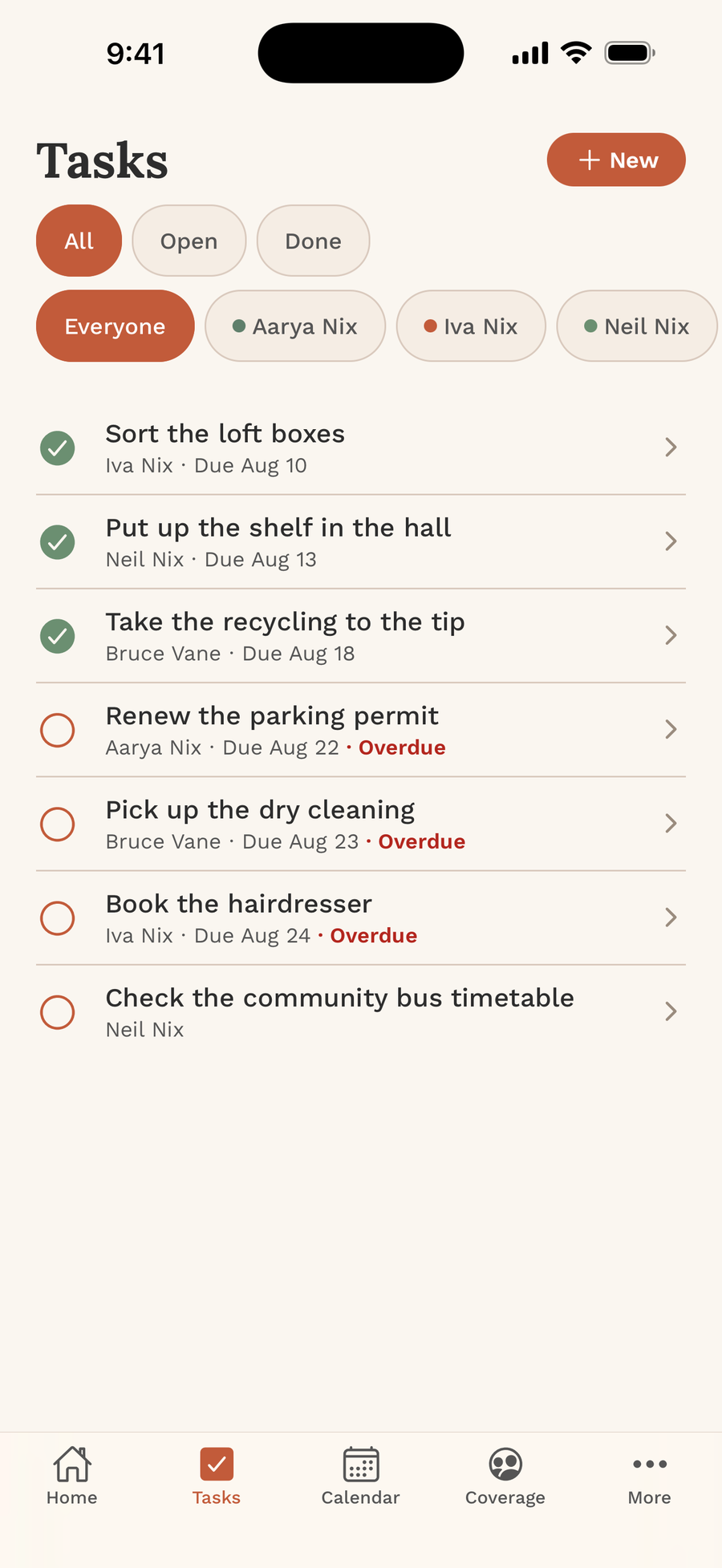
In FairNest, a family shares one Nest: tasks with a named owner, coverage for who is on duty, handoff notes, updates, cost splitting, and med tracking. A sibling doesn't have to ask you what's needed — they can open the Nest, see their job, and do it. See how it works at getfairnest.com.
Step four: what if a sibling still won't help?
Sometimes, after a clear list and a fair, specific ask, a sibling still won't step up. I won't pretend that doesn't hurt. It does, and it's worth grieving rather than arguing about forever.
At that point, your energy is better spent widening the circle than winning the argument. Could a neighbor own the evening check-in? Could a paid aide cover two afternoons a week, with the cost split in writing? Could a cousin or a local volunteer driver program take one recurring piece? A care team doesn't have to be only siblings to be a family effort.
And set one boundary for yourself: the hours and tasks you can actually sustain. Not as a threat — as a fact. Care that depends on one person running on empty isn't a plan. It's a countdown.
Bottom line
Bottom line: when siblings won't help with parents, start smaller than feels fair — one list, shared calmly, and one specific ask with a date on it. If a sibling still won't step up, widen the circle and protect the care anyway. You're not asking for too much; you're asking for your parent's care to be something your family carries together.
The warm close
Start smaller than feels fair. One list, shared calmly. One specific ask, given to one sibling, with a date on it. Most families don't fix years of lopsided care in one conversation, but they start in one honest one — where the work becomes visible and help becomes a job somebody can actually hold.
You're not asking for too much. You're asking for your parent's care to be something your family carries together, the way it should be.
FairNest is the family caregiving app I built for exactly this — one shared place for tasks, coverage, and updates, so no sibling has to carry it all alone. Download FairNest on the App Store or on Google Play, and join the conversation on our Instagram.