
A fall home safety checklist for elderly parents starts with heat, light, and a plan: book the furnace check, test the detectors, light the dark routes, and agree on who checks in after a storm. Fall is the kindest time to do it — every fix is still easy, and winter problems are usually just fall chores that got skipped.
Imagine it's the first truly cold evening of the year. You call your mom mostly to say hello — and she mentions, almost in passing, that the house feels chilly and the furnace is making a noise it didn't make last winter.
She's fine. She's made tea. She's decided it's probably nothing.
But you hang up a little unsettled. It's not just the furnace. It's everything winter quietly asks of a house, and of the person living alone in it: shorter days, slippery steps, a power outage that would be an annoyance in your apartment and something else entirely in hers.
Fall is the kindest time to get ahead of all that — now, on a mild weekend, when every fix is still easy. If your parent wants to stay in their home, this is how you help that home hold up its end of the bargain.
This is general information only, not medical advice — for specifics about your parent's health or house, check with their doctor or a qualified professional.
1. How do I get an elderly parent's house ready for winter?
Start with heat, because everything gets harder in a cold house.
Book the furnace check now, while companies have openings. Change the filter, test the thermostat together, and make sure your parent knows who to call if the heat stops at 9 p.m. Put that name and number on the fridge, and share it with the family.
While you're at it, test the smoke and carbon monoxide detectors and swap in fresh batteries. Check that any space heater has clear space around it and gets turned off at night. And find what nobody wants to hunt for in the dark: working flashlights, extra batteries, and a battery pack that can charge a phone through an outage.
None of this is dramatic. That's the point. Winter problems are usually fall chores that got skipped.
2. Walk the dark and slippery routes
Fall asks different questions than summer daylight did.
Walk from the car to the front door at dusk. Is it lit the whole way? Are leaves piling up where a step hides underneath? Look at the steps the way ice will find them in a month or two. A railing that wobbles, a mat that slides, a gutter that drips onto the front step — small now, consequential later.
Inside, walk the evening route: bedroom to bathroom, bathroom to kitchen, lights low. As days shorten, your parent will spend more hours moving around in the dark. Plug-in nightlights along that route are cheap and one of the most useful things you can do in an afternoon.
Then talk about the hard-weather plan. Who clears snow or checks in after a storm? What stays stocked — food, medications, pet supplies — so a couple of bad-weather days don't force a risky trip out? You're not solving winter. You're making sure the first bad day isn't the first day anyone thought about it.
3. What should our power outage plan for Mom or Dad cover?
Every family should be able to answer three questions without guessing: How will we know if something's wrong? Who will check in, and how often? And where would your parent go — or who would come to them — if the house got too cold to stay in?
Write the answers down somewhere everyone can find them. Include the utility company's outage number, a neighbor with a spare key who is willing to be called, and one backup person if the usual checker-inner is traveling or sick.
That backup matters. A winter plan that depends entirely on one sibling isn't really a plan — it's a hope. Spread it out while the weather is pleasant and nobody feels put on the spot.
Why I built FairNest
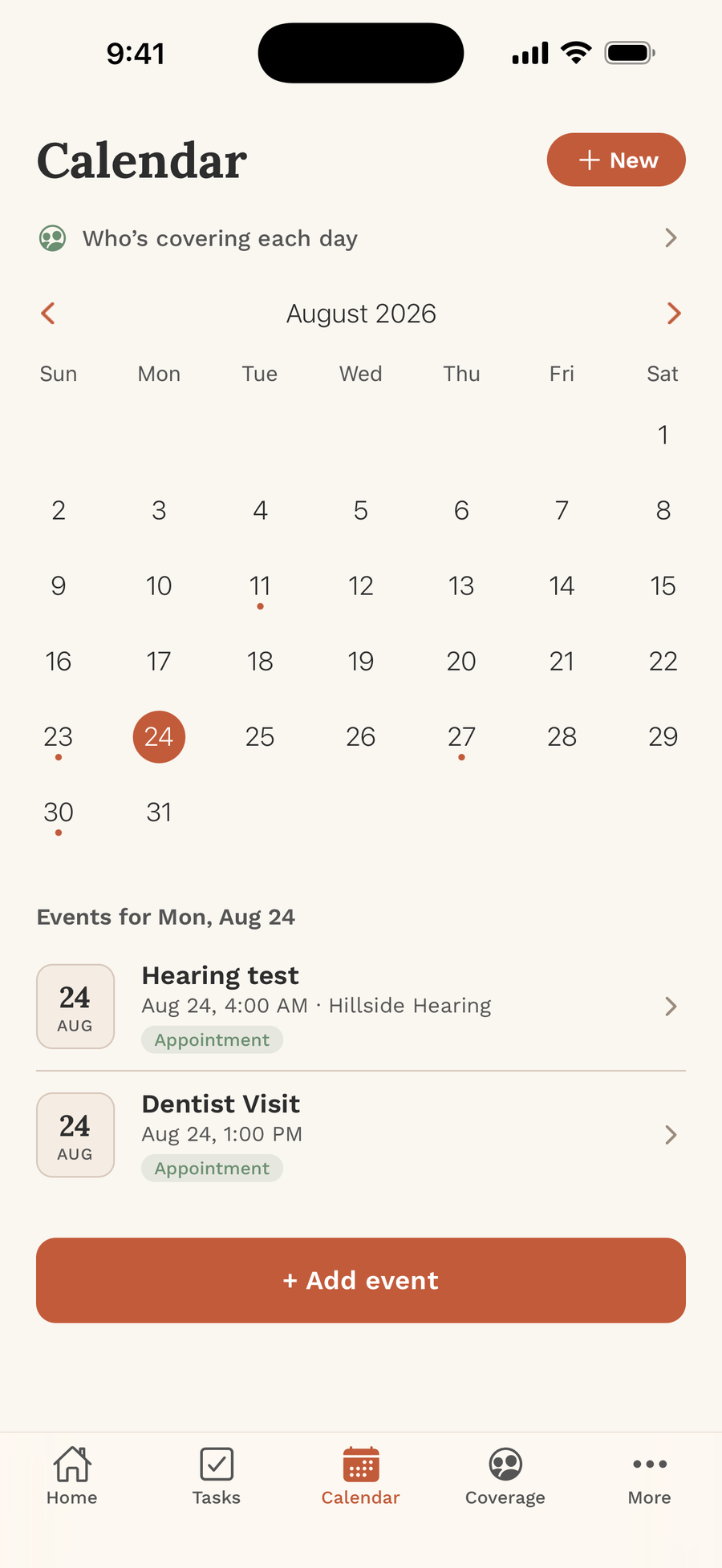
This kind of list is exactly why I built FairNest, my own app. Fall jobs used to live in three places at once: someone's memory, a text thread, and a note on a counter only one person ever saw. So the furnace check got booked twice or not at all.
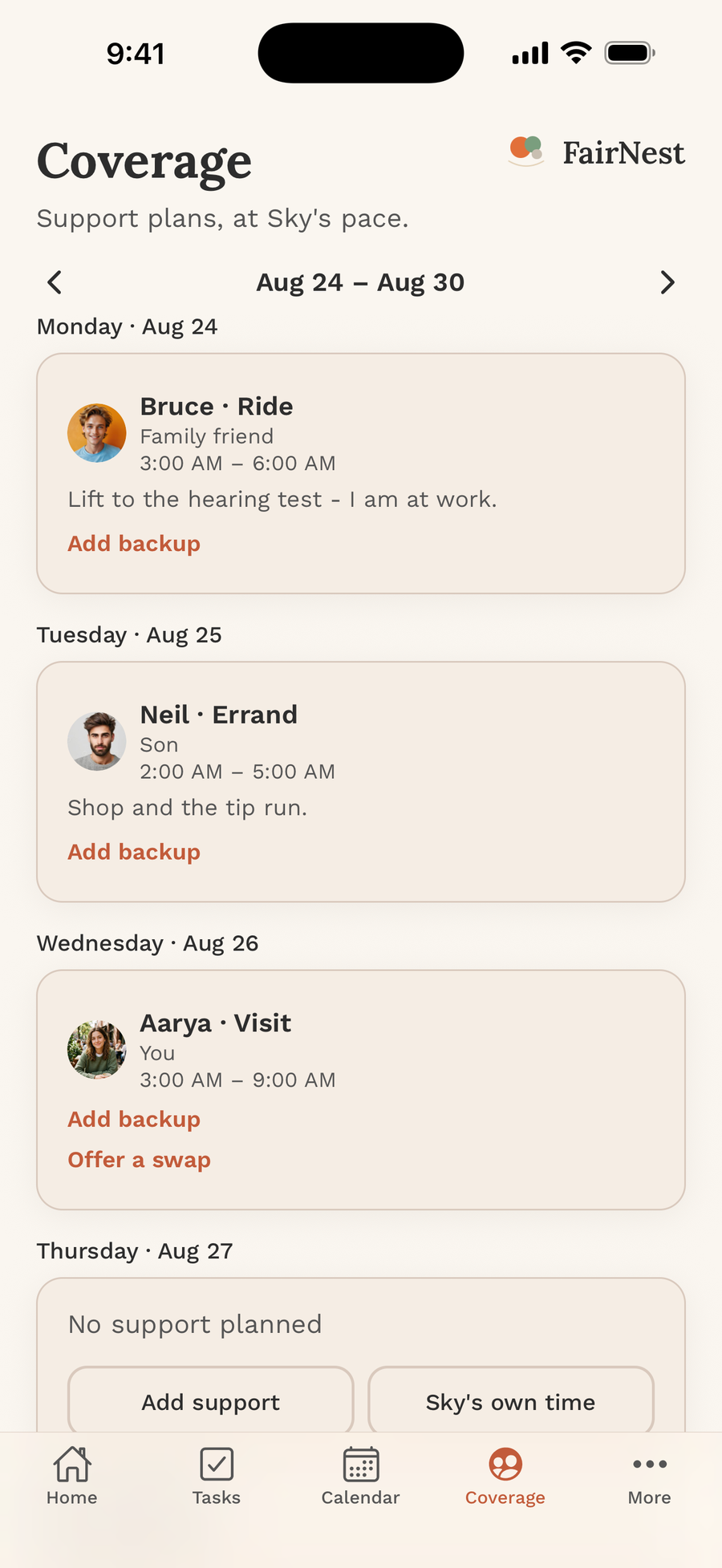
In FairNest, the shared Nest turns that list into visible tasks and coverage — who booked the check, who is checking in on Saturday, what the outage plan is — in one place the whole family can see. If that sounds familiar, see how it works at getfairnest.com.
4. Stock for staying in, and plan for getting out
For staying in: a few days of easy food, bottled water, basic supplies, and a small medication cushion so a delayed refill doesn't become urgent overnight. Ask, don't assume — your parent will tell you what they'd actually eat and use.
For getting out: keep the car, if your parent still drives, ready — tires, gas, a scraper, a blanket. And have one low-key conversation about rides. If the roads are bad, who could they call besides you? Naming that in October feels practical. Naming it during a storm feels scary.
Bottom line
Bottom line: winter problems are usually fall chores that got skipped. Book the furnace check, light the dark routes, agree on a storm check-in plan with a backup person, and stock a few days of supplies. Planning ahead in fall isn't worry — it's care, done early enough to feel like love instead of panic.
The warm close
You don't have to do all of this in one weekend. Pick the furnace, the lights, and the check-in plan, and you've already changed what winter will feel like — for your parent, who gets to stay home in a house that's ready, and for you, who can hear "the furnace is making a noise" and answer calmly, because you already know who to call.
Planning ahead in fall isn't worry. It's care, done early enough to feel like love instead of panic.
FairNest is the family caregiving app I built for exactly this kind of shared planning — tasks, coverage, and handoff notes in one Nest. Download FairNest on the App Store or on Google Play, and find more small, practical ideas on our Instagram.