
The hidden costs of family caregiving rarely look dramatic — gas, grab bars, groceries for two households — but they add up to a second rent payment nobody budgeted for. The fix is a shared expense log everyone can see, agreed categories for what's shared, and a short monthly review, so small imbalances never become family fights.
Say your mom falls on a Tuesday. Nothing broken, thank goodness — but the doctor says no stairs for two weeks, and someone needs to be there. So you start driving over. Gas, twice a day. A grab bar for the bathroom, because the suction-cup one from the pharmacy shelf was basically decorative. A nightlight for the hallway, because she's getting up to use the bathroom at 2 a.m. and you lie awake picturing another fall. Groceries, because her fridge was mostly condiments and one optimistic yogurt. A week's worth of takeout for yourself, because who has time to cook.
None of these are dramatic expenses. Add them up over three months and you're staring at a drawer full of crumpled receipts and a number that makes your stomach drop.
Here's the part nobody warns you about: the hidden costs of caregiving aren't the big ones. It's the death by a thousand $23 charges that gets you.
What are the hidden costs of caregiving?
When people talk about family caregiving costs, they usually mean the big, visible things: home care aides, adult day programs, assisted living. But for most families in the early years, the money leaks out in smaller, quieter ways:
- Transportation. Gas, tolls, rideshares to appointments, parking garages at the hospital that charge by the hour like you're renting office space.
- The house itself. Grab bars, shower chairs, raised toilet seats, ramps, better lighting, removing the rug your mom loves because it's a fall risk and replacing it with something that won't send her to the ER.
- Food. Groceries for two households. Meal delivery on the weeks you can't cook. Takeout on the days you're too wrung out to even microwave.
- Your own income. The reduced hours. The turned-down promotion because you can't take on travel. The unpaid time off that nobody tracks.
- The little things. Pharmacy copays. The pill organizer that broke. New slippers with actual grip. A whiteboard for the fridge so everyone knows what changed this week.
Individually, these are rounding errors. Together, they're a second rent payment you never signed up for.
Why do caregiving costs cause sibling fights?
The receipts drawer doesn't cause fights because of the amount. It causes fights because of the invisibility.
One sibling is nearby, absorbing the gas and the groceries and the $40 grab bars, saying nothing because it feels petty to bring up $40. The others genuinely have no idea. Then one day the local sibling mentions the running total, and a conversation about grab bars becomes a conversation about who cares more.
Money in caregiving is almost never about money. It's about feeling seen. The sibling who quietly spent $2,300 doesn't need to be repaid to the penny — they need someone to notice and say, "That's real, and it counts."
What I wish we'd done: the shared money log
The fix isn't complicated. It's about making the spending visible so resentment never gets a foothold. Here's the system I wish every family set up on day one:
1. One shared log, not a spreadsheet nobody opens. The moment a care-related expense happens, it goes in a single shared place — amount, what it was, who paid. Not a Google Sheet that one person updates when they remember. A living log everyone can see, in the moment. The bar for entry has to be low enough that you'll actually do it in a pharmacy parking lot.
2. Agree on the categories upfront. Decide together what's shared (medical supplies, home safety, groceries for the parent's house) and what's personal. The categories matter less than the agreement. Most fights aren't over totals; they're over one sibling thinking something counted and another thinking it didn't.
3. Review monthly, briefly. Fifteen minutes, once a month: what's the total, is anyone out of pocket more than their share? Monthly keeps small imbalances from compounding into big grievances. If a sibling is carrying more, the log makes it obvious — and obvious is fixable.
4. Count the invisible labor in the conversation. The sibling who lives ten minutes away and does the Tuesday-to-Thursday coverage is contributing something the log can't capture. Fair isn't always equal, and that's okay — as long as everyone can see the whole picture.
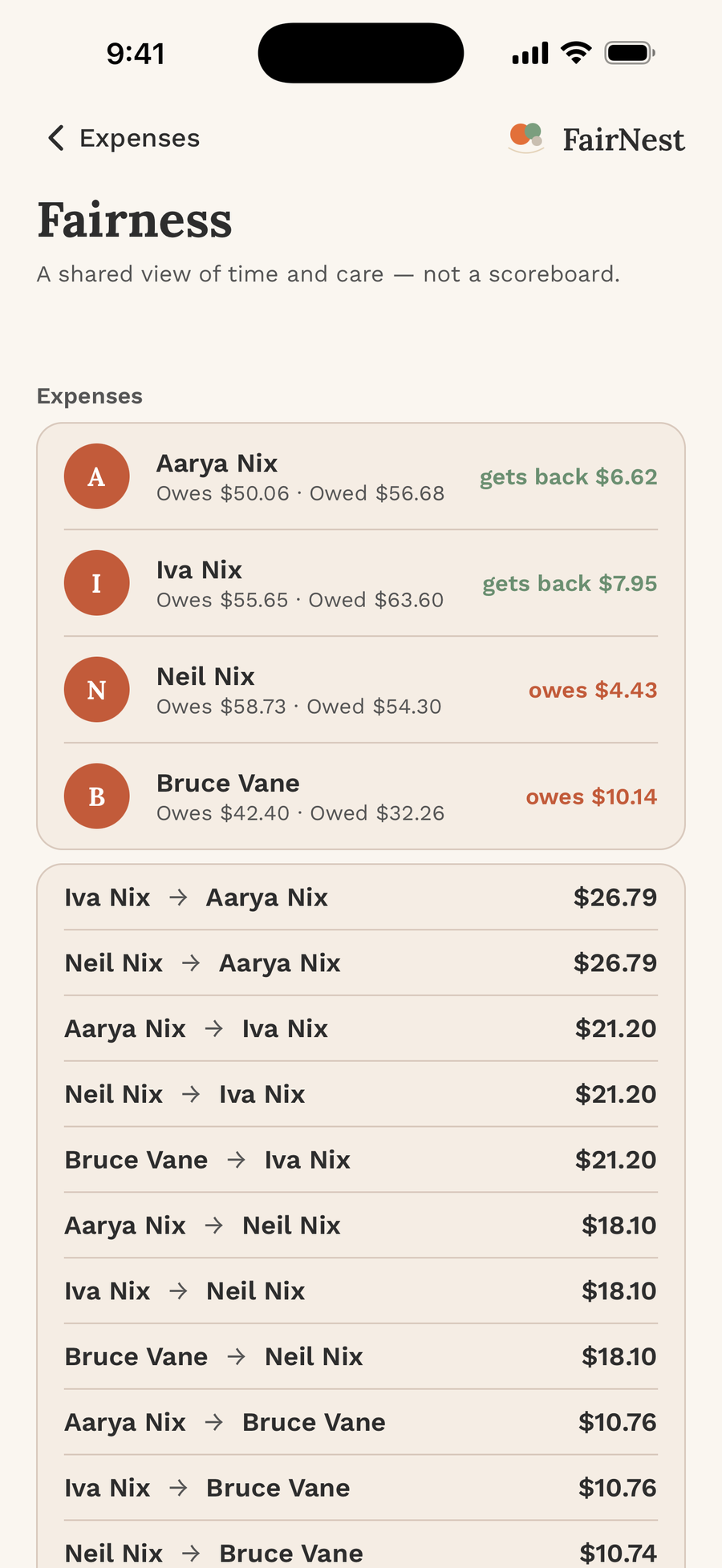
This is part of why I built FairNest the way I did. It has a shared Nest for tasks, coverage, and handoff notes — but it also has cost splitting built in, because I watched families try to track care expenses in a group chat and fail. My own app had to solve this: one place where the whole family sees what was spent, who paid, and what it was for. No receipt drawer. No mystery. No accidental bankers floating thousands while everyone else assumes it's handled.
The tax-season bonus
One more thing the receipt drawer teaches you the hard way: when April rolls around, you cannot reconstruct nine months of caregiving expenses from memory and crumpled paper. A running shared log does double duty — it keeps the family honest all year, and gives you (or your parent's tax preparer) actual records when it matters.
This isn't tax or financial advice — talk to a qualified professional about what applies to your family.
Bottom line
Bottom line: the hidden costs of caregiving add up quietly — gas, groceries, grab bars, lost income — and the money fights that follow are almost never about the amount. They're about feeling seen. One shared expense log, agreed categories, and a fifteen-minute monthly review keep small imbalances from becoming big grievances.
Start this weekend
You don't need a system overhaul. This weekend: empty the receipt drawer (literal or metaphorical) and total it up. Tell your siblings the number — not as a bill, as information. Set up one shared expense log everyone can add to, and agree on what's shared. Then put a monthly 15-minute review on the calendar.
The money in caregiving will never be fun to talk about. But talked-about money is manageable money. The kind that destroys families is the kind nobody mentions until it's too late.
FairNest is my own app — a shared space for families coordinating care: tasks, coverage, handoff notes, med tracking, and yes, cost splitting. You can learn more at getfairnest.com, download it on the App Store or Google Play, or follow along on Instagram.