
Organizing an elderly parent's medications starts with one weekly habit: a twenty-minute pill sort where you count what's left, check refills before Friday, look at new bottles, and write down anything different. Count backward from the bottle — not forward from memory — and share the result with every sibling, so the week's medication routine helps the whole family, not just the person in the room.
Imagine this: it's Wednesday evening, and you're on the phone with your mom, who's doing fine, doing great, she's got it all handled — except you're doing the quick mental math and realizing the pill organizer you filled on Sunday is somehow still half-full on Wednesday. Did she double up somewhere? Skip days? Or just lose count?
You don't say anything — it feels like nagging. But the worry hums in the background until Sunday, when you refill the organizer and start the guessing all over again.
Here's the thing: medication mix-ups are the most fixable problem in family caregiving. They're not a personality issue, they're a systems issue. And there's one small weekly habit that fixes most of them.
How do I do a weekly pill sort for my parent?
Once a week, set aside twenty minutes — same day, same time, the way you'd treat any standing appointment — and do a quick audit of the week's medications. Not a lecture. Not an interrogation. Just a routine that answers five questions before they become problems. Here's your checklist.
1. Count what's left, not what was taken.
The mistake most families make is trying to track pills forward: did she take it, did she forget, did she take two? Forward tracking requires surveillance nobody wants. Backward tracking just requires a count. If the bottle had 30 pills on Sunday and there are 24 left on Saturday, the week went fine. If there are 28 left, something's off — and you get to ask gently, with a number instead of an accusation. The pill organizer tells you what was planned. The bottle tells you what happened. Trust the bottle.
2. Do the refill math before Friday.
Refills run out on Friday evenings like clockwork — it's practically a law of caregiving. During your weekly sort, check: how many pills are left, and will they last through the next refill? Count days, not vibes. If the pharmacy needs a call, if the doctor needs to authorize a refill, if insurance needs paperwork — that's a Tuesday problem, not a Friday-night problem. One weekly glance kills the weekend refill scramble.
3. Check the new bottles.
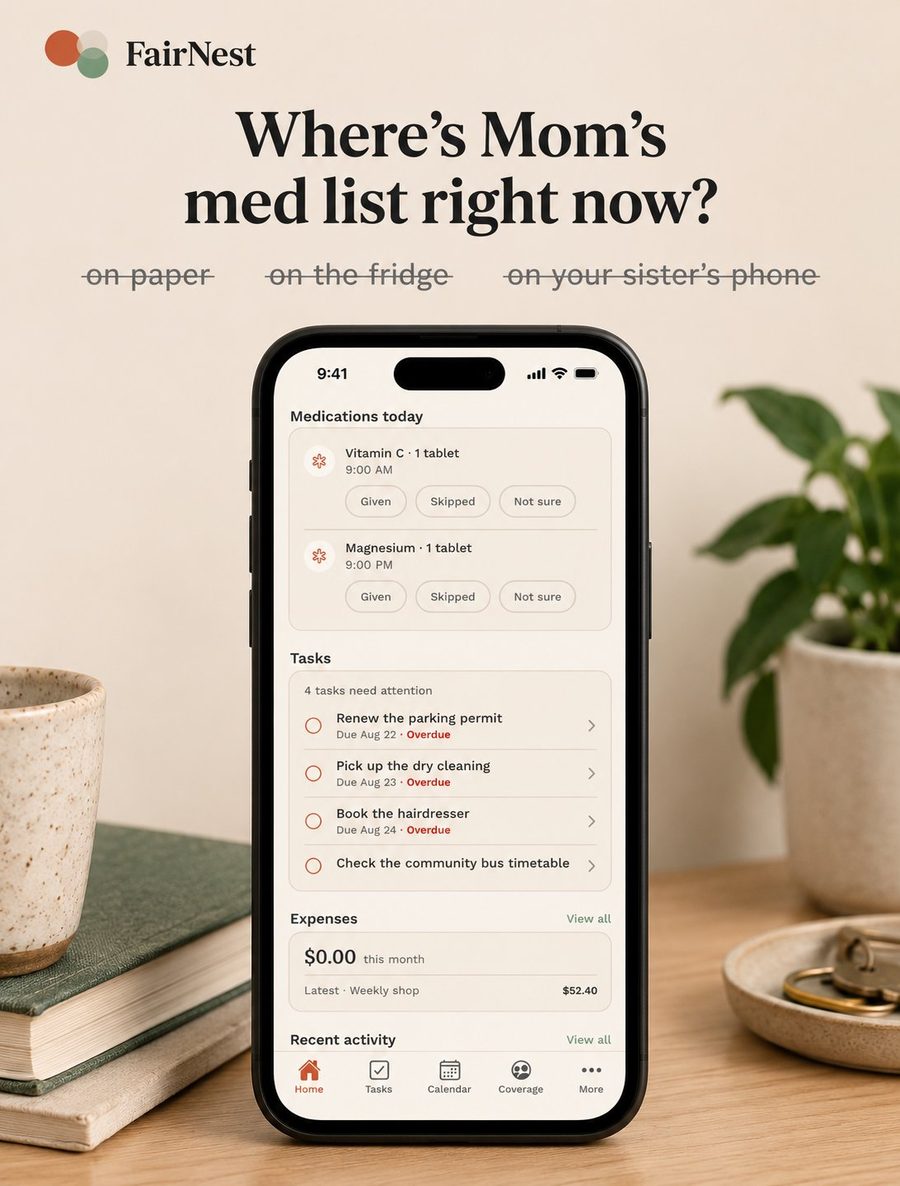
If a prescription was filled this week, look at the pills themselves before they go into the organizer. Pharmacies switch generic manufacturers all the time, and the "same" medication can come back a different shape, color, or size — which panics exactly the parent who's careful about taking the right pill. Hold the new pill next to the old one. If it's different, confirm the label matches what was prescribed, and call the pharmacy if anything looks off. A two-minute check beats a week of your parent quietly skipping the "weird-looking" pill.
4. Note anything different.
This is the one nobody does, and it's the most valuable at the next doctor visit: write down what happened this week. One line. "Skipped Tuesday's evening pill — felt fine." "New bottle of the blood pressure one." "Says the blue pill makes her dizzy at night." You won't remember this in three weeks at the appointment. Nobody remembers this in three weeks at the appointment. But the doctor needs it — especially the dizzy-at-night part — and your one-line notes turn "she's been fine, I think" into something a doctor can actually work with.
5. Make the week visible to everyone.
Here's where sibling caregiving usually breaks down: one person does the pill sort, and the knowledge lives in their head. The far-away sibling doesn't know refills ran late. The local sibling who covers Tuesdays doesn't know the morning pill was skipped. A twenty-minute routine helps exactly one person unless the result is shared — a note, a text, an update everyone can see, so nobody has to ask "wait, what's the current situation?" before helping.
This isn't medical advice — talk to your parent's doctor or pharmacist about what's right for them.
Why I built FairNest around weeks like this
I'm the founder of FairNest — it's my own app — and I'll be honest about why medication tracking is in it. I watched a family try to figure out, from three states away, whether their dad had been taking his new heart medication correctly. Nobody knew. Not because nobody cared — everyone cared — but because the weekly count lived in one person's head and the refill status lived in another person's phone.
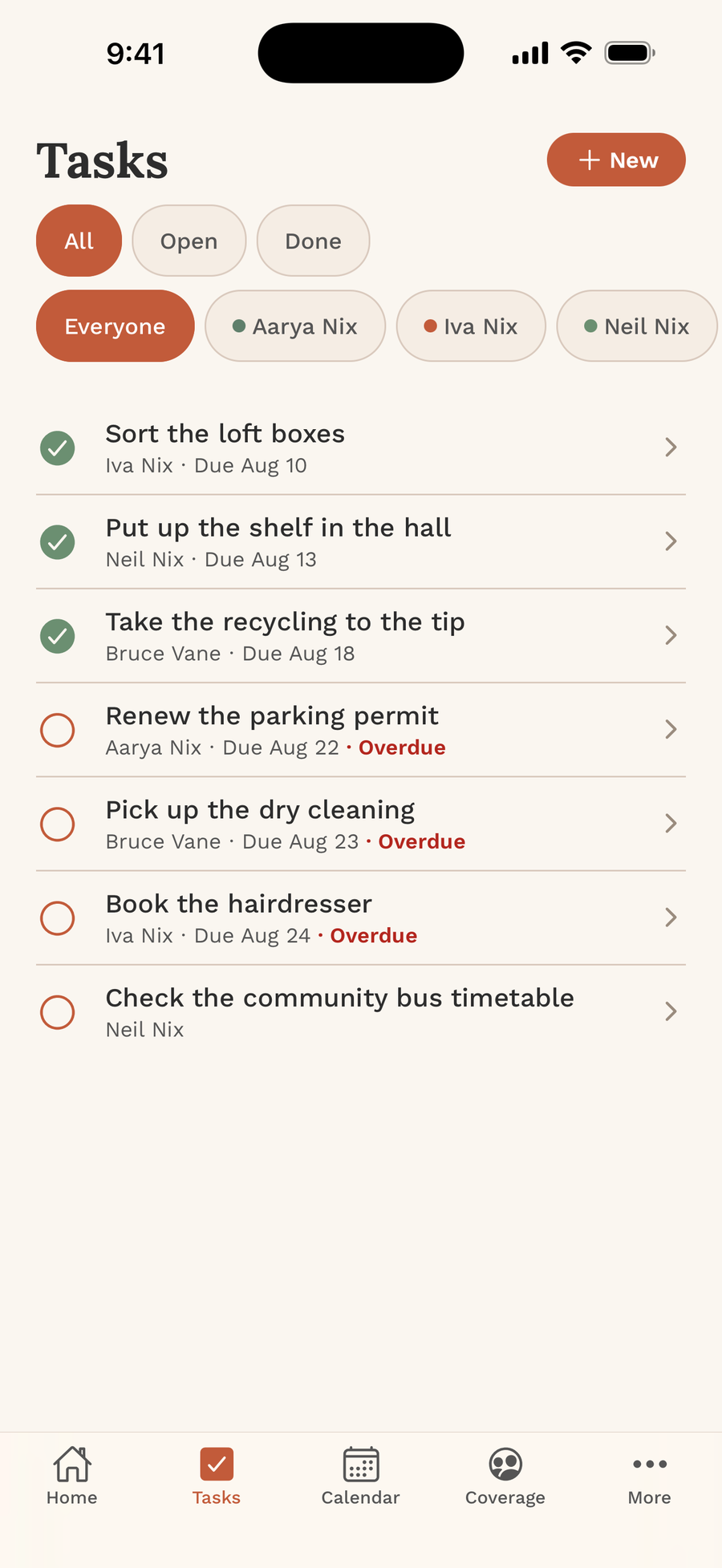
So in FairNest, the Nest — our shared family space — holds the medication list where every sibling can see it, and tasks flag refills before they run out instead of after. The idea is simple: the Saturday pill sort should take twenty minutes and make everyone smarter, not twenty minutes that only helps the person in the room. If you've been doing the mental math alone, you can read more about how families use it at getfairnest.com — you can find it on the App Store or on Google Play if you want to try it with your family.
How do I start a medication routine this weekend?
This Sunday, before you fill the organizer, spend twenty minutes with the bottles. Count backward, check the refills, glance at the new labels, write down anything different, and send a two-sentence update to your siblings.
The first time you do it, you'll probably find something — a refill that's tighter than you thought, a bottle you don't recognize. That's the whole point. Twenty quiet minutes, once a week, and the worrying-hum in the background gets a little quieter. Your parent gets safer medications without a single argument. And you stop being the family pill detective and go back to just being their kid.
Bottom line
Bottom line: a weekly pill sort takes twenty minutes and answers the questions that keep you up at night — count what's left, check refills before Friday, look at new bottles, and write down anything different. Share the result with every sibling, and the routine stops living in one person's head.
You can also follow along with more of these at https://www.instagram.com/fairnestapp/ — and if the idea of a shared family space for all of this sounds useful, getfairnest.com has the details.