
When siblings won't help with parents, the fix usually isn't a bigger argument — it's naming the invisible caregiving roles everyone fell into, matching people to jobs by fit instead of guilt, and writing the plan down where everyone can see it. Roles that are visible become negotiable, and negotiable roles can actually be shared.
Say your dad has a bad fall in the kitchen. He's okay — shaken up, bruised, the kind of fall that could have been so much worse — but it lands like a thunderclap in your family's group text. And within about 48 hours, without a single conversation, everyone has a job.
You're the coordinator. Your brother quietly covers the home health aide invoices until someone remembers to pay him back. Your sister, three states away, becomes the emotional support person — the one who calls Mom twice a week and ends up crying in her car afterward, because there's nothing tangible she can actually do.
Nobody applied for these roles. Nobody was interviewed. Nobody asked, "Does this work for you?" They just... calcified. And for a while, the system hums along. Then one Tuesday, months later, somebody says the wrong thing about who's "really helping," and the family detonates over a scheduling question that was never about the schedule.
I wish I'd known: most sibling caregiving blowups aren't about laziness or selfishness. They're about roles that were never assigned, never discussed, and never renegotiated — until the resentment got loud enough to do the negotiating.
1. Why are invisible caregiving roles so dangerous?
Here's what makes unassigned roles so corrosive: the person doing the job can't fully see how much they're carrying, and everyone else can't see it either. The coordinator absorbs dozens of tiny decisions a week — which specialist to call back, what to do about the weird charge on the insurance statement. None of it shows up as a line item. There's no shift to clock out of.
The fix is boring and transformative: say the roles out loud. Literally list them — coordinator, finances, medical liaison, emotional check-ins, hands-on shifts, research, paperwork. Write them on a piece of paper or in your shared notes. The moment a job becomes visible, it becomes negotiable. That's half the battle right there.
2. Match people to roles by fit, not by guilt
Families default to "everyone should do equal amounts of the same things," which sounds fair and works for almost nobody. Your brother who lives five minutes away but works sixty-hour weeks might be a terrible fit for Tuesday afternoon visits — but an excellent fit for handling the insurance paperwork he can do at midnight. Your sister across the country can't drive Mom to appointments, but she can own the medication list, the appointment research, and the twice-weekly "just checking in" calls that keep Mom's spirits up.
Fair doesn't mean identical. It means everyone carries something real, and the total load doesn't crush one person. Let people choose — a role someone chose is a role they'll actually do.
3. Put it in writing somewhere everyone can see
Verbal agreements in caregiving have a shelf life of about nine days. Then someone remembers the deal differently, or life shifts, and suddenly the coordinator is doing the finance job too and nobody noticed. This is the piece families skip because it feels overly formal for, well, family.
But here's the thing: a shared written list of who's doing what isn't corporate — it's kind. Nobody has to carry the whole plan in their head, and when circumstances change, you update the list instead of having a meltdown.
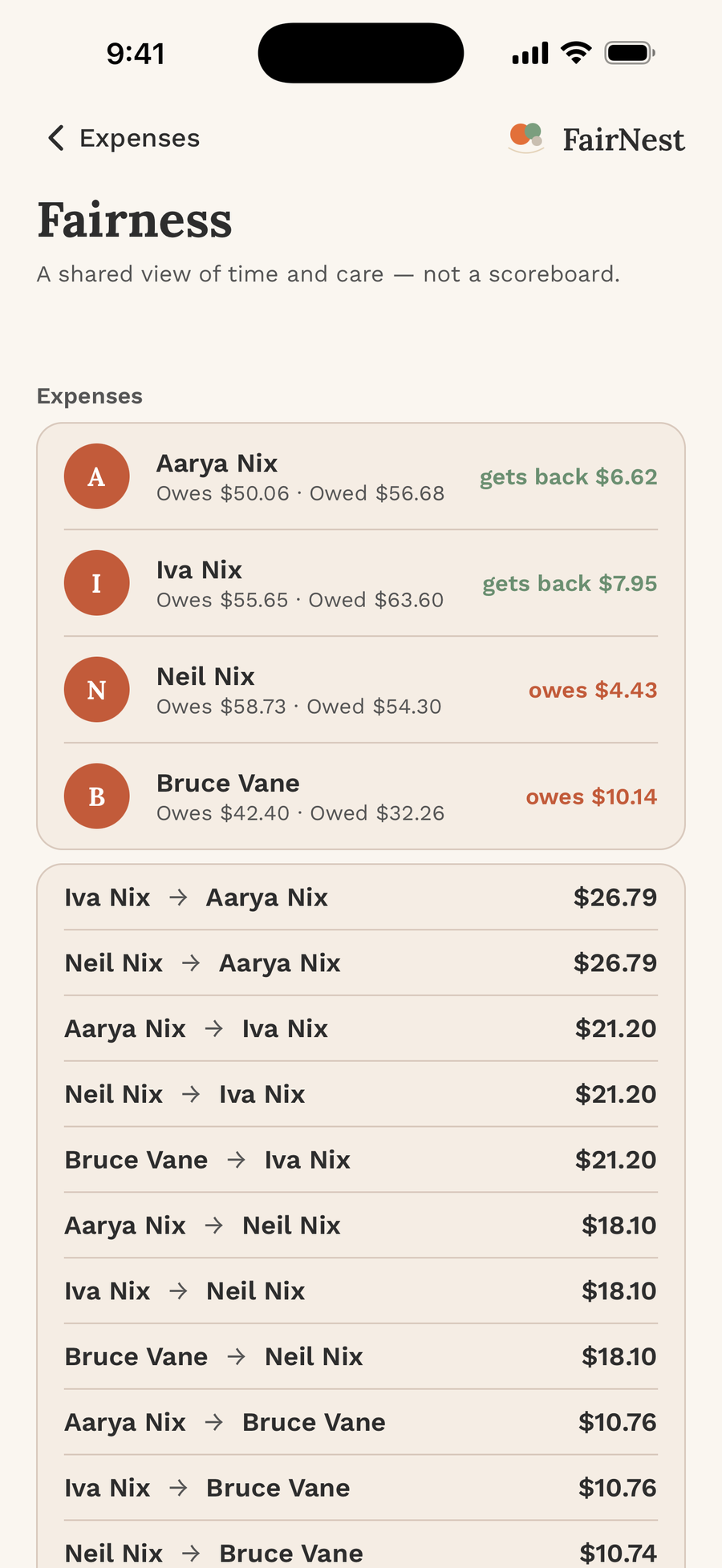
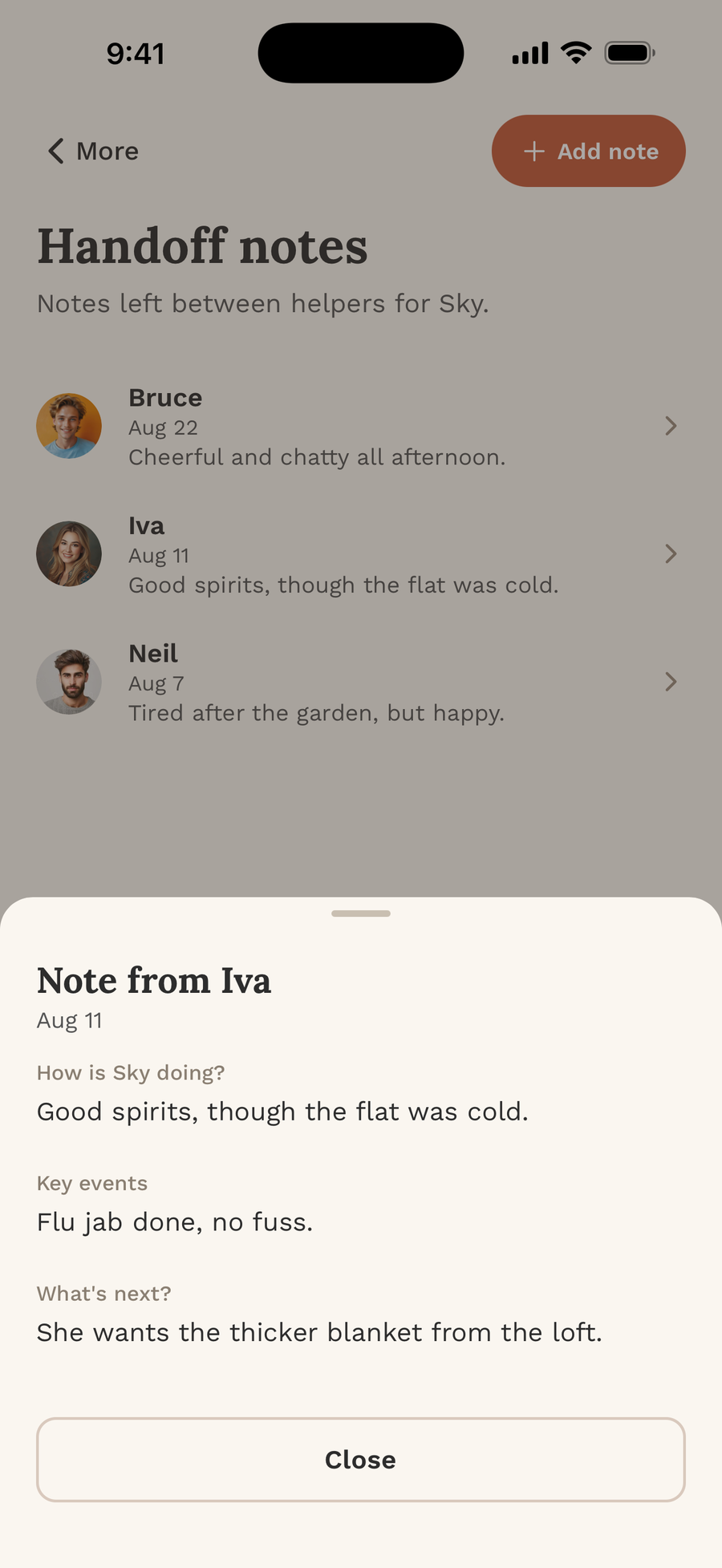
This is exactly why I built FairNest. When my family was coordinating care, we had no single place where the roles, tasks, and handoffs lived — everything scattered across group texts and one sibling's very tired brain. FairNest is my own app, and I built it so a family can run a shared "Nest" — tasks, coverage, updates, handoff notes, and cost splitting in one place, visible to everyone.
4. How often should siblings renegotiate caregiving roles?
Here's the part nobody talks about: care needs change, and so do sibling capacities. The role assignment that worked beautifully in March can be suffocating by September. If the plan is "we decided once, forever," it's not a plan — it's a time bomb.
Pick a date — every three months works for most families — to revisit the roles. Make it routine, not reactive. A standing check-in removes the drama: nobody has to work up the courage to say "I can't keep doing this" because the calendar asks first. Frame it as maintenance, not complaint. The goal isn't to keep the original arrangement; it's to keep the arrangement honest.
5. Give the default CEO a real off-ramp
In almost every family, one person becomes the default CEO of care — the one who knows every medication, every doctor's name, every pending bill. If that's you, you already know: this role has no exit. Everyone else's jobs have edges. Yours is the ocean.
If you're the CEO sibling, the kindest thing you can do for the whole family is not burn out quietly. Ask for one concrete thing to be taken off your plate this month — not "help more," but a specific role, transferred to a specific person. Write down what you know the way you'd explain it to a nurse at shift change: current status, pending items, watch-outs. Then let go of it for real.
Bottom line
Bottom line: the roles your family fell into were never assigned, never discussed, and never renegotiated — and that's what makes them so corrosive. Say them out loud, match people to jobs by fit, write the plan down where everyone can see it, and put a renegotiation date on the calendar. Visible work is shareable work.
Nobody in your family signed up for a job in elder care. But the jobs got assigned anyway — quietly, invisibly, and permanently until someone breaks the silence. Naming the work is the first step to sharing it, and the conversation doesn't have to be a fight.
If you want one place to keep all of it — the roles, the tasks, who's covering what — FairNest is what I built for exactly this, and you can grab it here: download it on the App Store or on Google Play. And if you're figuring this stuff out week by week, we're talking about it honestly over at @fairnestapp — come join the conversation.